Tell us about the job
Takes about a minute. No obligation.

A contractor sizing or installing a furnace in Pickett County starts with the house, the ductwork, and the age of whatever was there before. 33 severe weather events were recorded in Pickett County, Tennessee between 2015 and 2024. That puts severe weather in the background of equipment life here, not the foreground. A furnace that is struggling has most likely been undersized from the start, or it has simply run its course. The load calculation a contractor runs reflects the actual demand of this climate, and in Pickett County that calculation leaves room for the install itself to be the deciding variable.
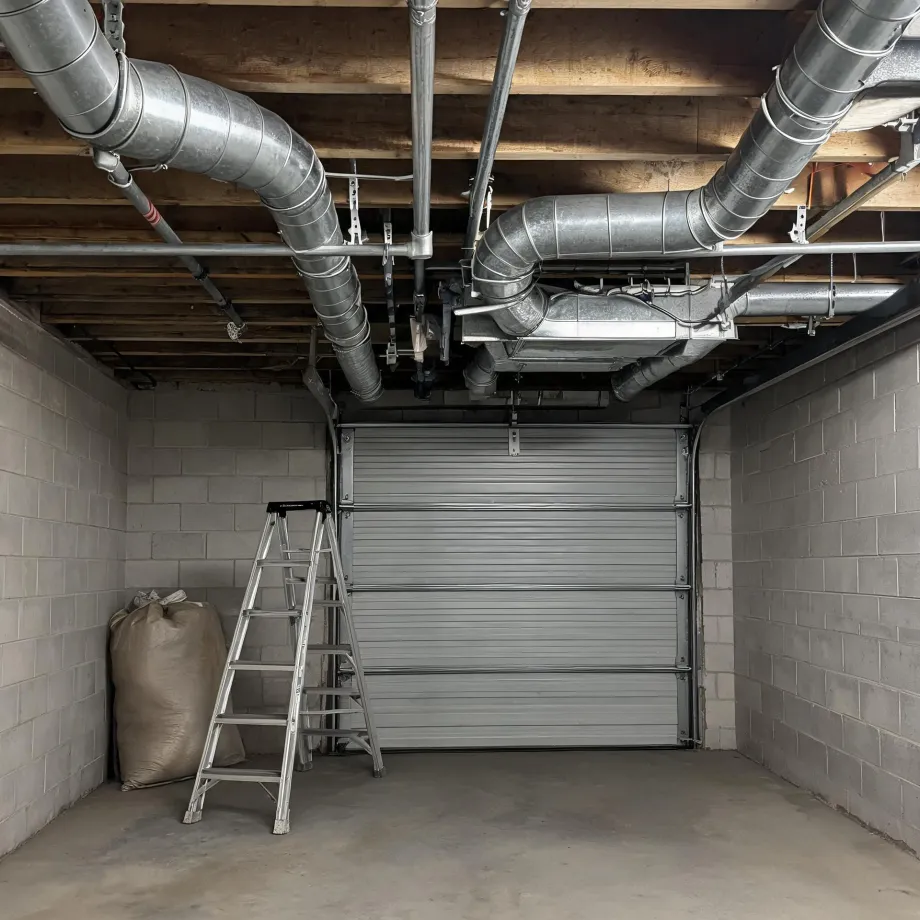
Existing ductwork is what shapes a furnace installation in Pickett County more than anything a homeowner picks off a spec sheet. Half the homes in Pickett County, Tennessee were built in 1993 or earlier (2020-2024 ACS 5-year). Houses built through that period were ducted for equipment with different airflow demands than a modern furnace carries, and runs that worked then can restrict or unbalance a new system if a contractor does not check them first. A contractor who sizes a new furnace without measuring what the existing duct network will actually move leaves the homeowner with a unit that runs but does not perform.
What Gets Installed With a New Furnace
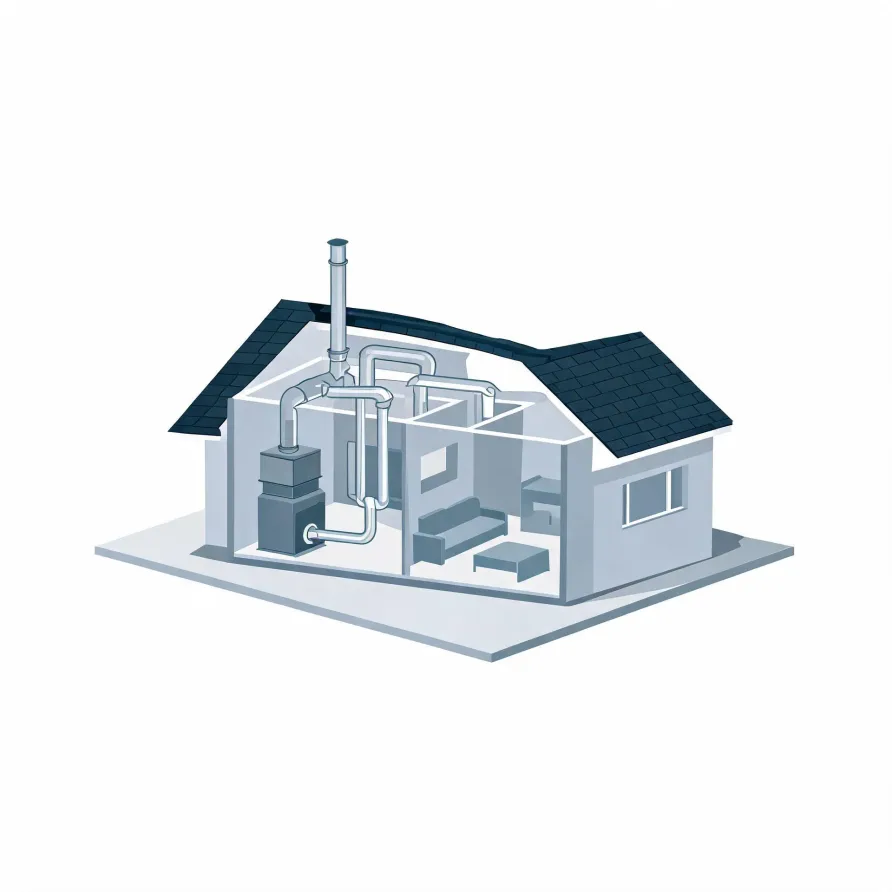
The furnace itself sits in a utility room, basement, or closet and is the core unit a contractor places during installation. A heat exchanger lives inside that cabinet, and a burner assembly fires beneath it. The blower motor, also inside the cabinet, pushes conditioned air out through the supply side of the home.
The flue pipe runs from the furnace up through the wall or roof and carries combustion gases out of the house. Alongside the furnace, a contractor installs the gas line connection and the air filter housing, which typically mounts at the return-air entry point where air enters the cabinet before it is heated and moved.
The drawing shows a general layout of these components, and a licensed contractor determines exactly how each one is configured for this particular house.
Find a contractor in Pickett CountyPickett County, by the numbers
33 severe weather events were recorded in Pickett County, Tennessee between 2015 and 2024.
NOAA National Centers for Environmental Information, Storm Events Database, bulk CSV export, events 2015-01-01 through 2024-12-31.Half the homes in Pickett County, Tennessee were built in 1993 or earlier (2020-2024 ACS 5-year).
U.S. Census Bureau, 2020-2024 American Community Survey 5-Year EstimatesPickett County, Tennessee holds 3,360 housing units (2020-2024 ACS 5-year).
U.S. Census Bureau, 2020-2024 American Community Survey 5-Year EstimatesOwners occupy 83.4% of the occupied homes in Pickett County, Tennessee (2020-2024 ACS 5-year).
U.S. Census Bureau, 2020-2024 American Community Survey 5-Year EstimatesCodes & Standards Governing Furnace Installation in Pickett County, Tennessee5 sourced rules and standards
What the Installation Actually Looks Like
Non-weatherized gas furnaces manufactured on or after November 19, 2015 must reach 80.0 percent AFUE.
Non-weatherized oil-fired furnaces manufactured on or after November 19, 2015 must reach 83.0 percent AFUE.
Mobile home gas furnaces manufactured on or after November 19, 2015 must reach 80.0 percent AFUE.
Non-weatherized gas furnaces manufactured on or after December 18, 2028 must reach 95.0 percent AFUE, up from the 80.0 percent minimum that applies to units manufactured before that date.
Licensing and Legal Requirements in Pickett County, Tennessee
Tennessee licenses contractors by classification, and HVAC, refrigeration and gas piping is one of them — a sub-classification of mechanical contracting on the licence the Board for Licensing Contractors issues.
Severe Weather Events in Pickett County
Weather in Pickett County puts real demands on heating equipment, from sustained cold that runs furnaces hard to storm activity that stresses the whole system. How much a furnace works depends heavily on local conditions, which is why the record here matters when you're thinking about installation.
33 severe weather events, 2015–2024. Source: NOAA National Centers for Environmental Information, Storm Events Database.