Tell us about the job
Takes about a minute. No obligation.
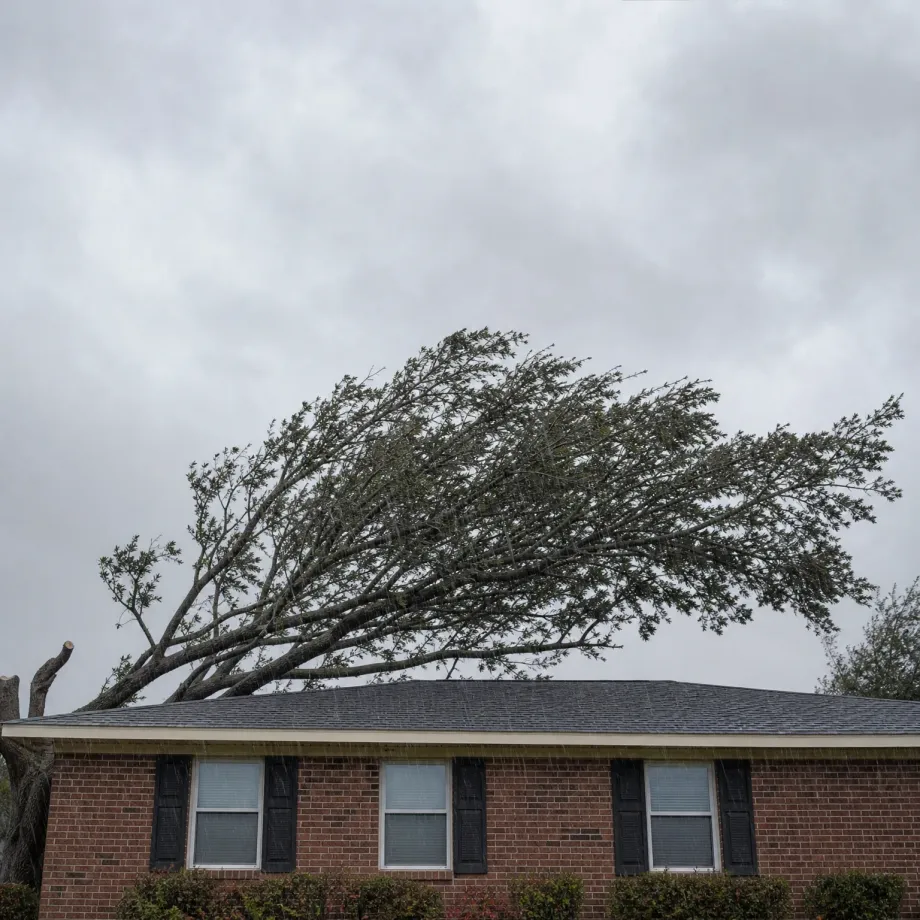
A furnace installation in Stewart County starts with what the existing system actually failed from. 84 severe weather events were recorded in Stewart County, Tennessee between 2015 and 2024. At that rate, severe weather is an occasional fact of life here, not a standing condition that grinds equipment down season after season. A contractor quoting a replacement has to look at duct sizing, venting, and how the previous unit was set up before attributing anything to the local climate. Poor original installation or deferred maintenance will explain most of what they find.
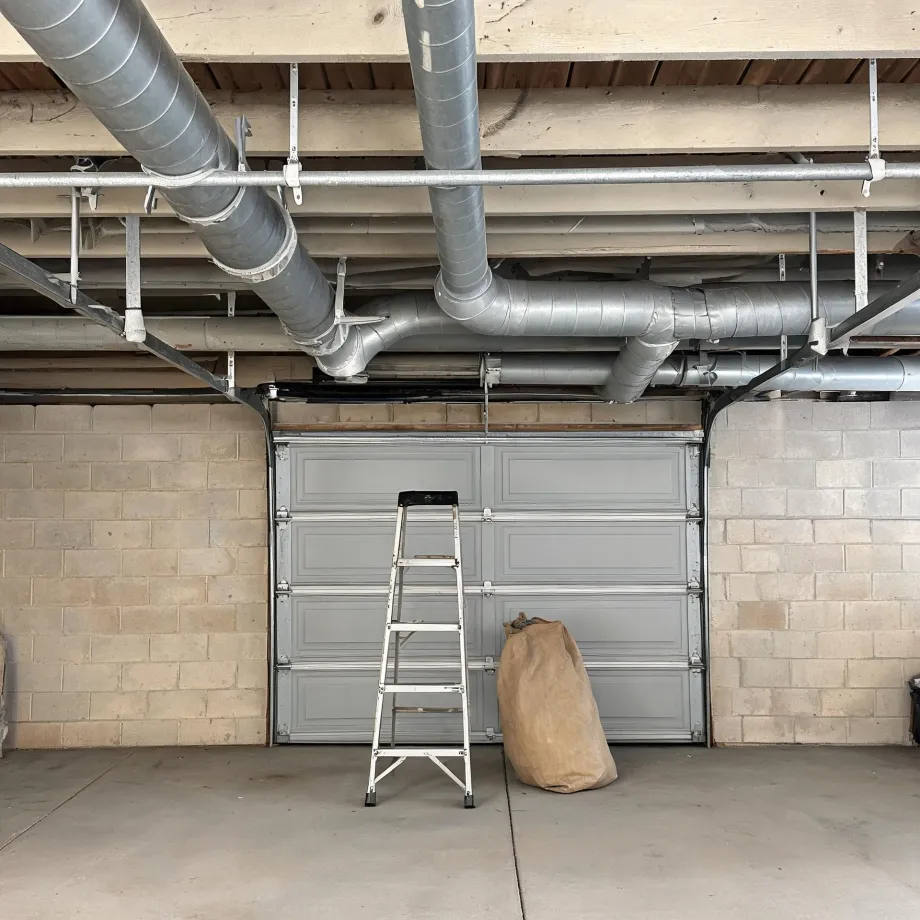
Ductwork laid down for an earlier generation of equipment does not automatically carry a new furnace well. Half the homes in Stewart County, Tennessee were built in 1989 or earlier (2020-2024 ACS 5-year). That span of time is long enough that a house may have had its original distribution system adapted, patched, or left as-is through multiple equipment changes, and what a contractor finds in the walls and crawlspace determines whether a new furnace install is straightforward or whether the duct system needs to be brought into agreement with it first. The electrical side follows the same logic. Neither variable shows up on a quote until someone gets into the house.
What Gets Installed With a New Furnace
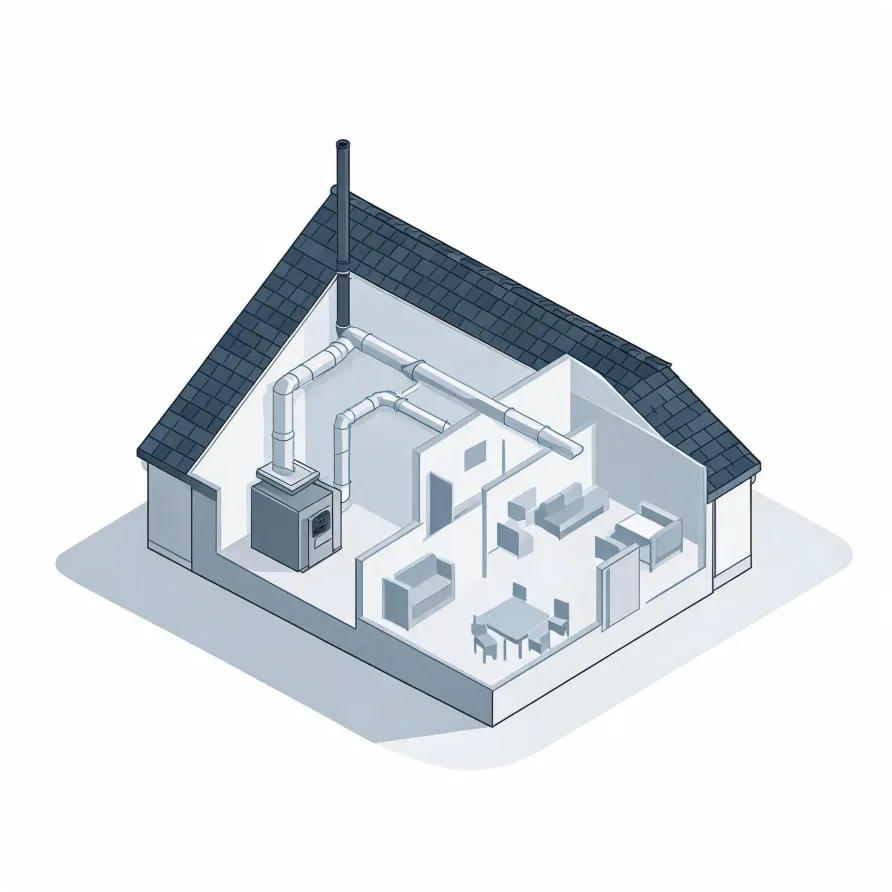
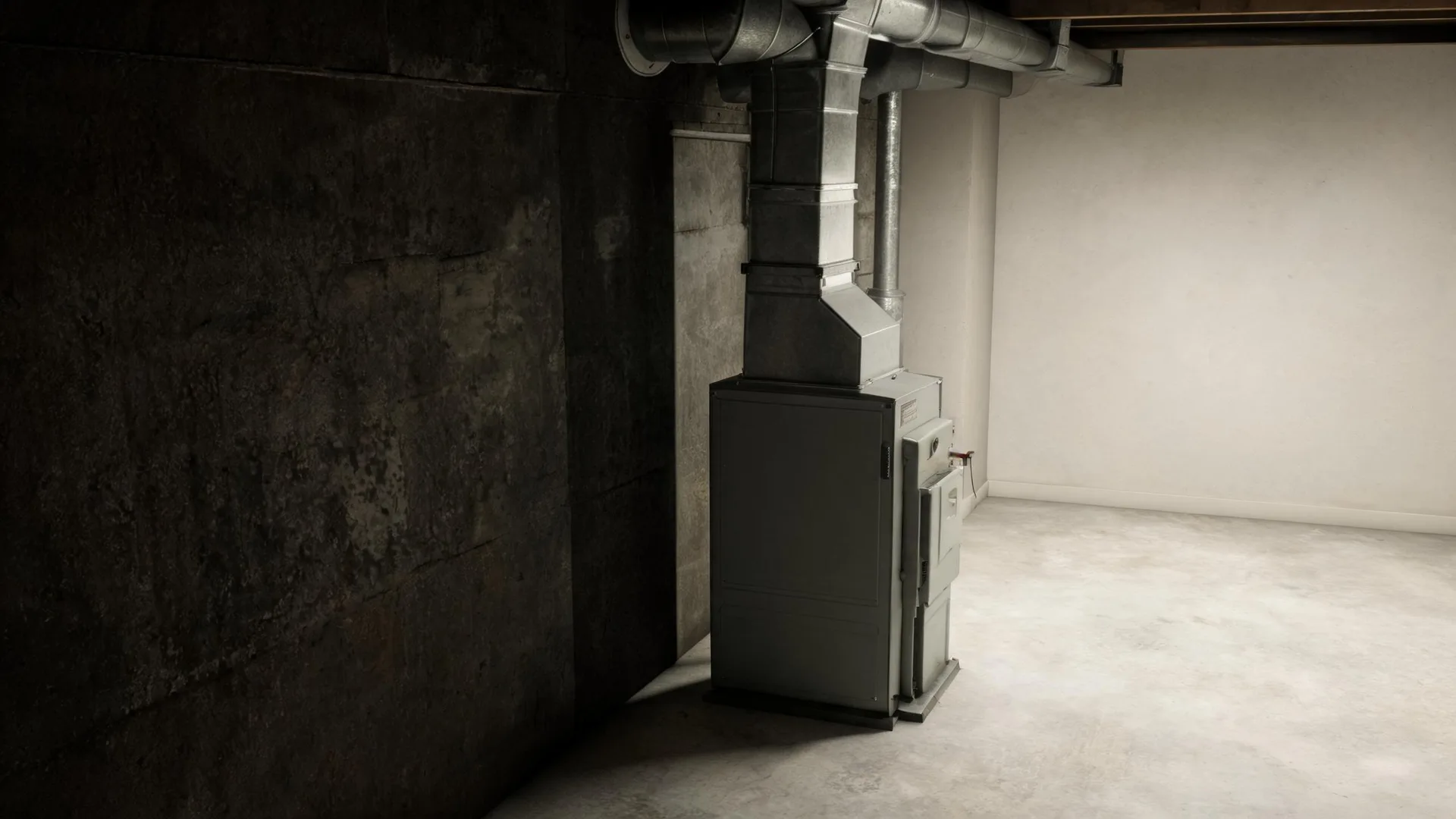
The furnace itself sits in a mechanical room, basement, or utility closet and is the unit that produces heat. A heat exchanger inside the cabinet transfers combustion heat to the air moving through, and a blower motor pushes that warmed air into the supply side of the duct system. The flue pipe exits the cabinet and runs to an exterior wall or through the roof to vent combustion gases outside.
The thermostat mounts on a wall in the living space and is the control point the homeowner uses daily. A gas line connects to the furnace's valve assembly, and a condensate drain handles moisture produced by high-efficiency units. The disconnect switch and any new supply and return plenums attach directly to the cabinet before it ties into the existing ductwork.
The drawing shows a representative layout, and a licensed contractor determines which components and configurations apply to your specific house.
Find a contractor in Stewart CountyStewart County, by the numbers
84 severe weather events were recorded in Stewart County, Tennessee between 2015 and 2024.
NOAA National Centers for Environmental Information, Storm Events Database, bulk CSV export, events 2015-01-01 through 2024-12-31.Half the homes in Stewart County, Tennessee were built in 1989 or earlier (2020-2024 ACS 5-year).
U.S. Census Bureau, 2020-2024 American Community Survey 5-Year EstimatesStewart County, Tennessee holds 6,718 housing units (2020-2024 ACS 5-year).
U.S. Census Bureau, 2020-2024 American Community Survey 5-Year EstimatesOwners occupy 81.1% of the occupied homes in Stewart County, Tennessee (2020-2024 ACS 5-year).
U.S. Census Bureau, 2020-2024 American Community Survey 5-Year EstimatesFurnace Installation Rules for Stewart County, Tennessee5 sourced standards and codes
What the Installation Actually Looks Like
Non-weatherized gas furnaces manufactured on or after November 19, 2015 must reach 80.0 percent AFUE.
Non-weatherized oil-fired furnaces manufactured on or after November 19, 2015 must reach 83.0 percent AFUE.
Mobile home gas furnaces manufactured on or after November 19, 2015 must reach 80.0 percent AFUE.
Non-weatherized gas furnaces manufactured on or after December 18, 2028 must reach 95.0 percent AFUE, up from the 80.0 percent minimum that applies to units manufactured before that date.
Licensing and Legal Requirements in Stewart County, Tennessee
Tennessee licenses contractors by classification, and HVAC, refrigeration and gas piping is one of them — a sub-classification of mechanical contracting on the licence the Board for Licensing Contractors issues.
Severe Weather Events in Stewart County
Weather extremes put real load on heating equipment, shortening service life and driving up the demand for capable installs. What the climate does in Stewart County shapes what a furnace here needs to handle.
84 severe weather events, 2015–2024. Source: NOAA National Centers for Environmental Information, Storm Events Database.