Tell us about the job
Takes about a minute. No obligation.
A contractor quoting a furnace installation in Jackson County is not sizing against a punishing weather load. 58 severe weather events were recorded in Jackson County, Tennessee between 2015 and 2024. At that rate, severe weather is an occasional event in a homeowner's lifetime with the equipment, and a furnace that has struggled here has almost certainly struggled because of how it was sized, how it was installed, or how long it has been running. That is what a contractor confirms before specifying a replacement unit, and it is what decides whether the next system fits the house correctly.
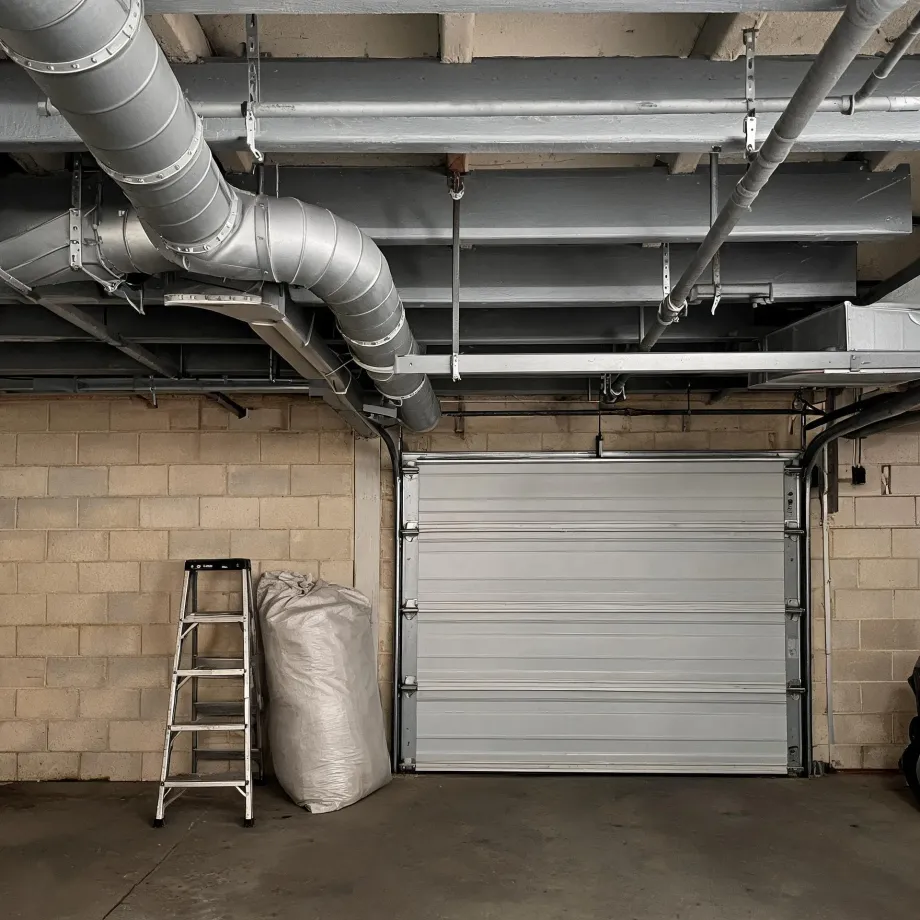
Ductwork laid in for one generation of equipment does not automatically carry the next. Half the homes in Jackson County, Tennessee were built in 1989 or earlier (2020-2024 ACS 5-year). A contractor installing a furnace in stock like this has to assess what the existing duct system was sized for and whether the electrical service at the panel matches what the new unit draws, because those two variables determine whether the installation is straightforward or whether the house needs additional work before the equipment goes in.
What Gets Installed With a New Furnace
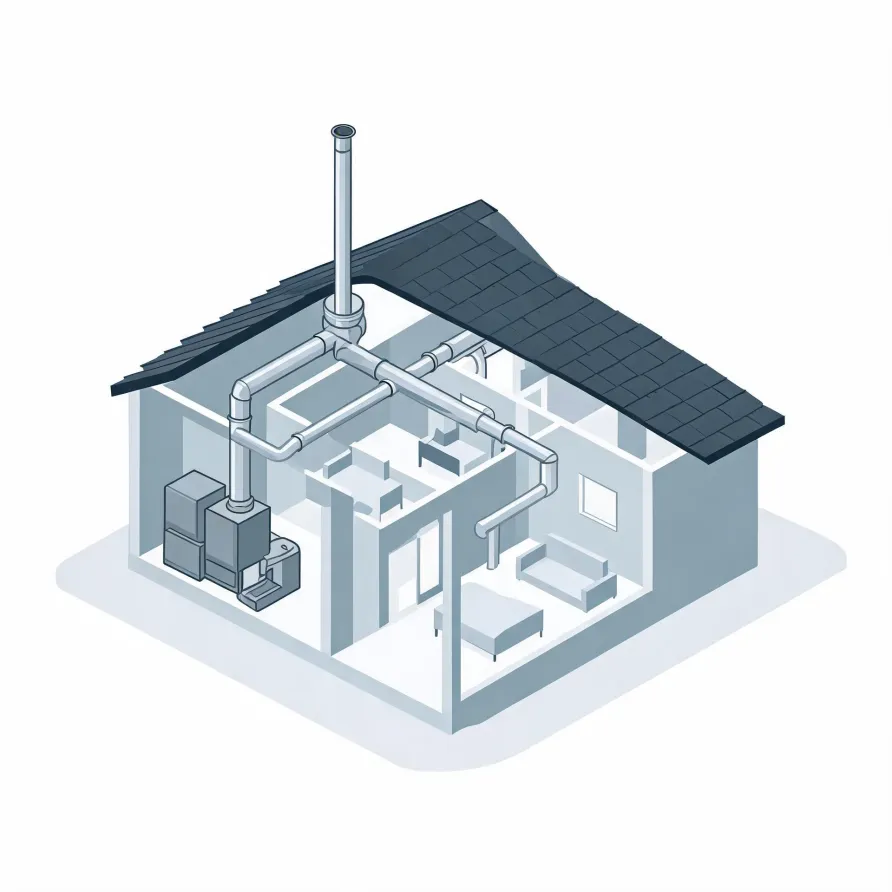
The furnace itself sits in a utility space, basement, or closet and is the unit that generates heat for the house. A burner assembly inside it ignites the fuel, and a heat exchanger transfers that heat to the air moving through the system. The blower motor then pushes that warmed air out through the supply side.
The flue pipe runs from the furnace to an exterior wall or roof and carries combustion gases out of the house. Sitting alongside the furnace, the air handler components and the filter housing connect the unit to the rest of the system, with the filter slot positioned where return air enters before it reaches the heat exchanger.
The drawing shows a general layout of these components, and a licensed contractor determines exactly what applies to your house.
Find a contractor in Jackson CountyJackson County, Tennessee, by the numbers
58 severe weather events were recorded in Jackson County, Tennessee between 2015 and 2024.
NOAA National Centers for Environmental Information, Storm Events Database, bulk CSV export, events 2015-01-01 through 2024-12-31.Half the homes in Jackson County, Tennessee were built in 1989 or earlier (2020-2024 ACS 5-year).
U.S. Census Bureau, 2020-2024 American Community Survey 5-Year EstimatesJackson County, Tennessee holds 5,854 housing units (2020-2024 ACS 5-year).
U.S. Census Bureau, 2020-2024 American Community Survey 5-Year EstimatesOwners occupy 81.1% of the occupied homes in Jackson County, Tennessee (2020-2024 ACS 5-year).
U.S. Census Bureau, 2020-2024 American Community Survey 5-Year EstimatesCodes & Standards Governing Furnace Installation in Jackson County, Tennessee5 sourced rules and standards
What the Installation Looks Like in Jackson County
Non-weatherized gas furnaces manufactured on or after November 19, 2015 must reach 80.0 percent AFUE.
Non-weatherized oil-fired furnaces manufactured on or after November 19, 2015 must reach 83.0 percent AFUE.
Mobile home gas furnaces manufactured on or after November 19, 2015 must reach 80.0 percent AFUE.
Non-weatherized gas furnaces manufactured on or after December 18, 2028 must reach 95.0 percent AFUE, up from the 80.0 percent minimum that applies to units manufactured before that date.
Licensing Rules for HVAC Work in Jackson County, Tennessee
Tennessee licenses contractors by classification, and HVAC, refrigeration and gas piping is one of them — a sub-classification of mechanical contracting on the licence the Board for Licensing Contractors issues.
Severe Weather Events in Jackson County
Jackson County's weather puts real demands on heating equipment, from hard freezes that push furnaces to their limits to temperature swings that wear on components over time. How often those conditions arrive shapes what a furnace here has to handle and how it should be sized and installed.
58 severe weather events, 2015–2024. Source: NOAA National Centers for Environmental Information, Storm Events Database.