Tell us about the job
Takes about a minute. No obligation.
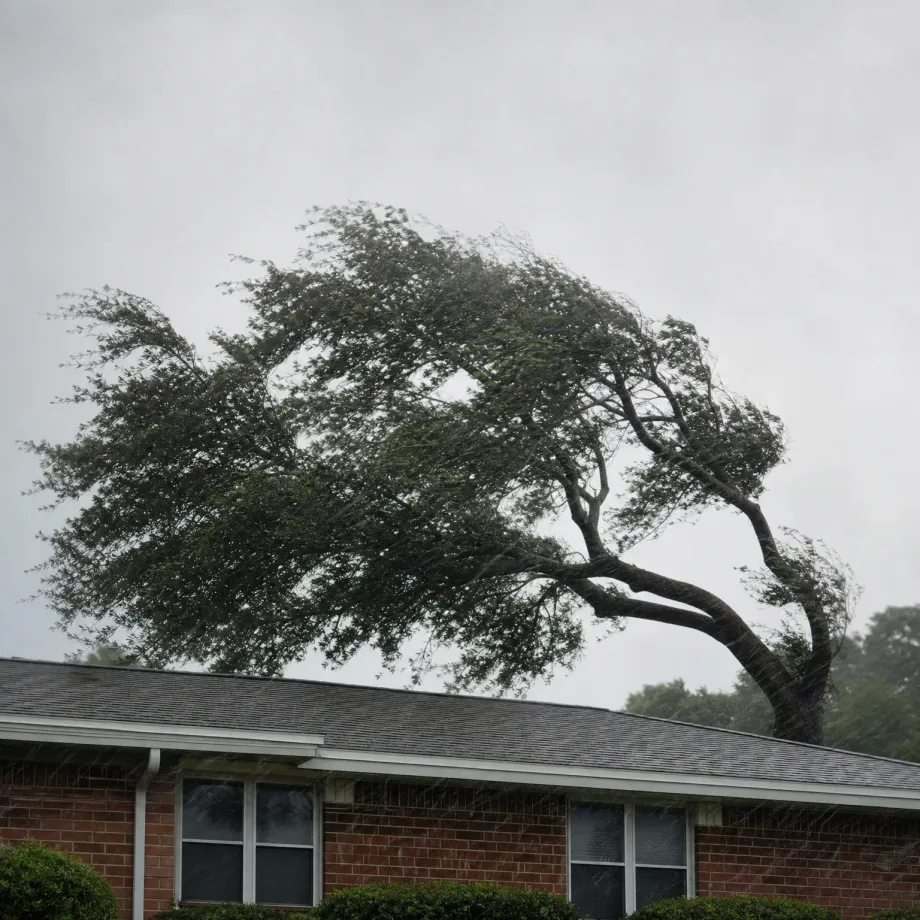
Sizing a furnace for a home in Cocke County starts with the house, not the headlines. 83 severe weather events were recorded in Cocke County, Tennessee between 2015 and 2024. At that rate, severe weather is an occasional fact of life here, not a standing operating condition, so a contractor doing an installation is not designing around extraordinary storm load. What drives the spec is the structure: square footage, insulation, duct layout, and how tightly the building holds heat. A system installed to those numbers, by a contractor who has worked this area, will run to its age rather than be pushed short of it by the climate.
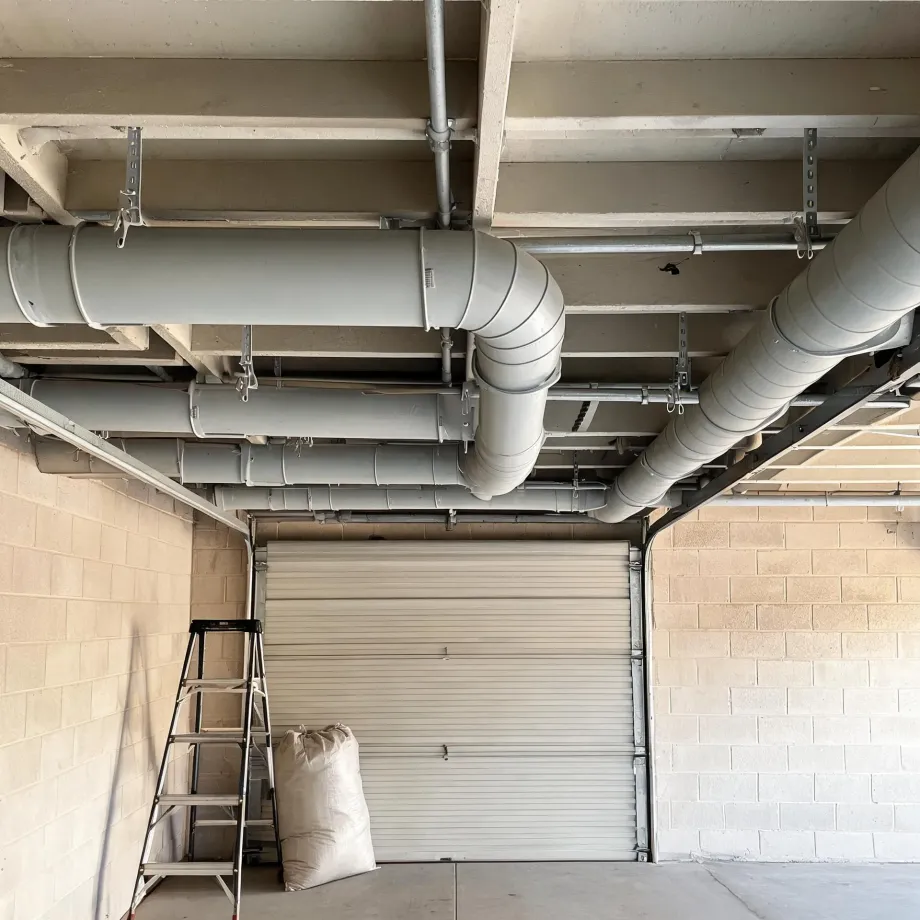
Ductwork laid down for an older furnace carries assumptions about airflow, trunk sizing, and return placement that a modern unit does not share. Half the homes in Cocke County, Tennessee were built in 1987 or earlier (2020-2024 ACS 5-year). A contractor quoting a furnace installation here has to assess whether the existing duct system will move air the way the new equipment needs it to, and where it will not, that work surfaces before the new unit ever goes in. Electrical service gets the same look, since load requirements have shifted over the decades the housing predates. The duct layout is where the scope of an installation job in this county actually gets set.
What Gets Installed With a New Furnace
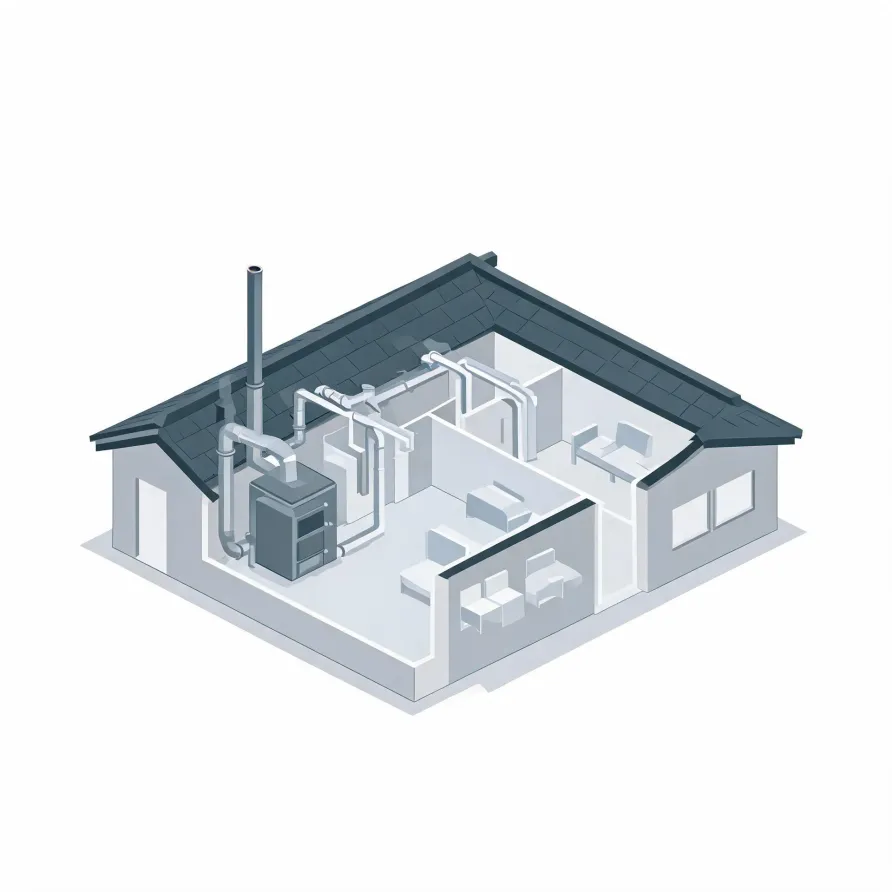
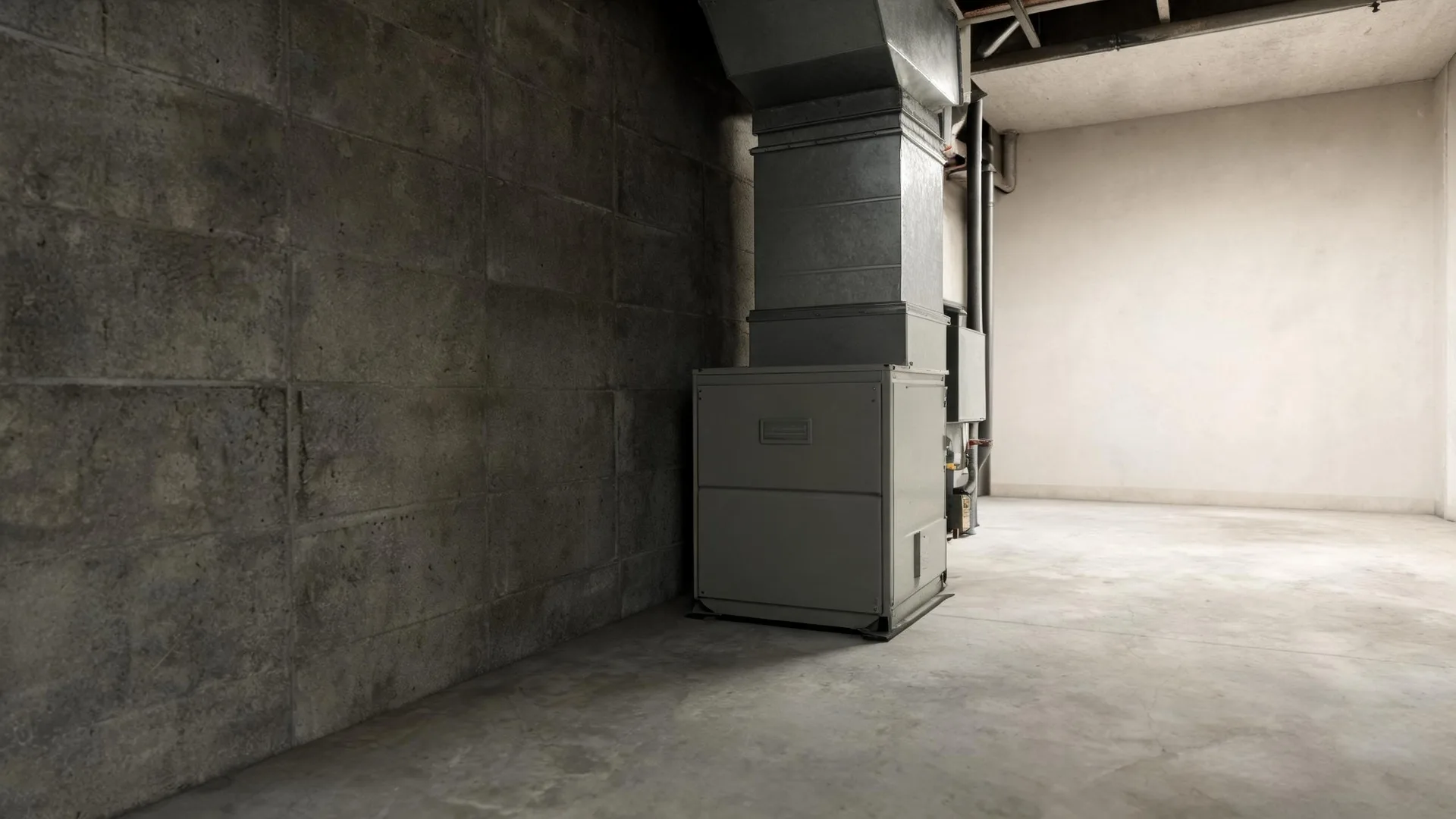
The furnace itself sits in a basement, utility room, or closet and is the unit a homeowner sees when they look at the system. Inside it, a heat exchanger and a blower motor do the work of warming air and pushing it out. A gas valve and a burner assembly connect to the fuel supply that feeds the heat exchanger.
The flue pipe runs from the furnace up and out of the house, carrying combustion gases away. Alongside that, a thermostat mounts on an interior wall and serves as the control point for the whole system, telling the furnace when to fire and when to stop.
The drawing shows a general layout of these components, and a licensed contractor determines exactly what applies to this house.
Find a contractor in Cocke CountyCocke County, by the numbers
83 severe weather events were recorded in Cocke County, Tennessee between 2015 and 2024.
NOAA National Centers for Environmental Information, Storm Events Database, bulk CSV export, events 2015-01-01 through 2024-12-31.Half the homes in Cocke County, Tennessee were built in 1987 or earlier (2020-2024 ACS 5-year).
U.S. Census Bureau, 2020-2024 American Community Survey 5-Year EstimatesCocke County, Tennessee holds 17,957 housing units (2020-2024 ACS 5-year).
U.S. Census Bureau, 2020-2024 American Community Survey 5-Year EstimatesOwners occupy 74.5% of the occupied homes in Cocke County, Tennessee (2020-2024 ACS 5-year).
U.S. Census Bureau, 2020-2024 American Community Survey 5-Year EstimatesFurnace Installation Rules on the Books for Cocke County, Tennessee5 codes, standards & licensing rules
What the Installation Actually Looks Like
Non-weatherized gas furnaces manufactured on or after November 19, 2015 must reach 80.0 percent AFUE.
Non-weatherized oil-fired furnaces manufactured on or after November 19, 2015 must reach 83.0 percent AFUE.
Mobile home gas furnaces manufactured on or after November 19, 2015 must reach 80.0 percent AFUE.
Non-weatherized gas furnaces manufactured on or after December 18, 2028 must reach 95.0 percent AFUE, up from the 80.0 percent minimum that applies to units manufactured before that date.
Licensing and Legal Requirements in Cocke County, Tennessee
Tennessee licenses contractors by classification, and HVAC, refrigeration and gas piping is one of them — a sub-classification of mechanical contracting on the licence the Board for Licensing Contractors issues.
Severe Weather in Cocke County
Weather puts a load on heating equipment that no spec sheet fully captures. What happens in Cocke County determines how hard a furnace works and how long it holds up, which is why a local contractor's installation choices matter.
83 severe weather events, 2015–2024. Source: NOAA National Centers for Environmental Information, Storm Events Database.