
Tell us about the job
Takes about a minute. No obligation.
A furnace installation in Hancock County starts with what the house actually needs, not with assumptions about harsh conditions driving the specs. 40 severe weather events were recorded in Hancock County, Tennessee between 2015 and 2024. At that rate, severe weather is an event here, not a standing condition, so a contractor cannot point to the climate to explain an oversized unit, a cracked heat exchanger, or a system that never kept up. What drives those problems is the quality of the original installation and how the equipment was maintained. A contractor quoting a replacement will look at duct layout, load calculations, and the existing flue before anything else.
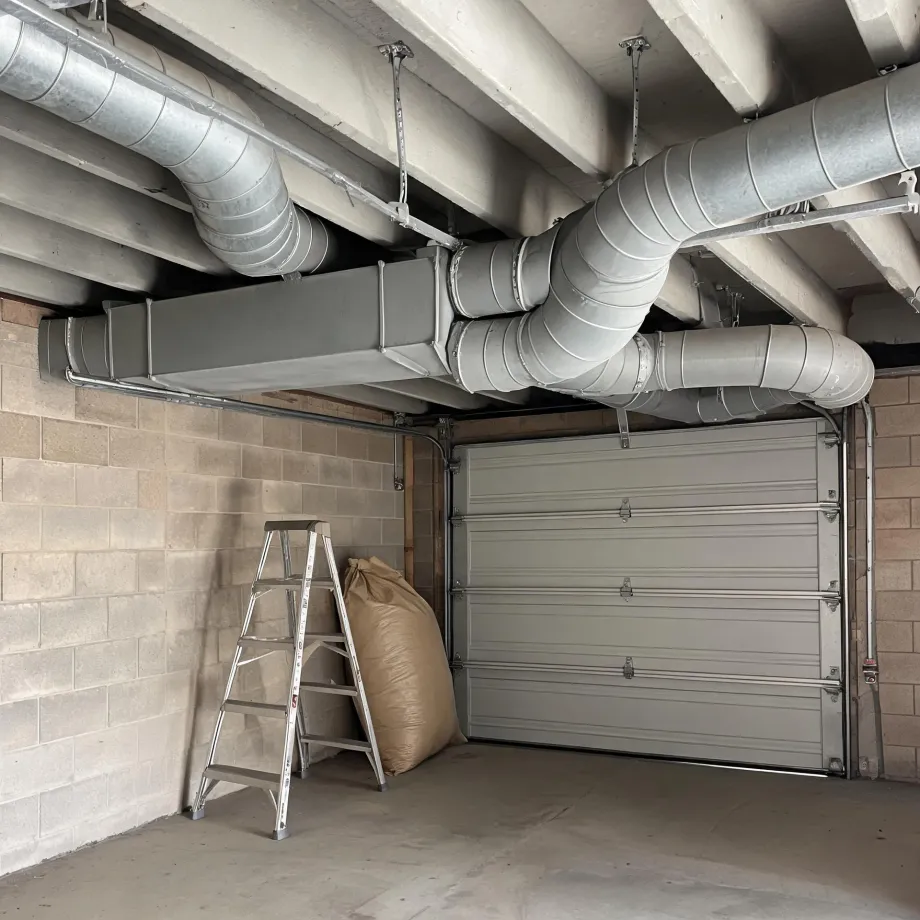
Ductwork laid down for the equipment of that era was sized to different load assumptions than a modern furnace carries. Half the homes in Hancock County, Tennessee were built in 1982 or earlier (2020-2024 ACS 5-year). A contractor quoting a furnace replacement here has to assess what those ducts will actually move before the unit is even selected, because a box that outpaces its distribution system runs short of the efficiency it was rated for. The electrical side follows the same logic: service panels from that period were wired for loads that do not match today's equipment. What the house already contains sets the real scope of the job.
What Gets Installed With a New Furnace
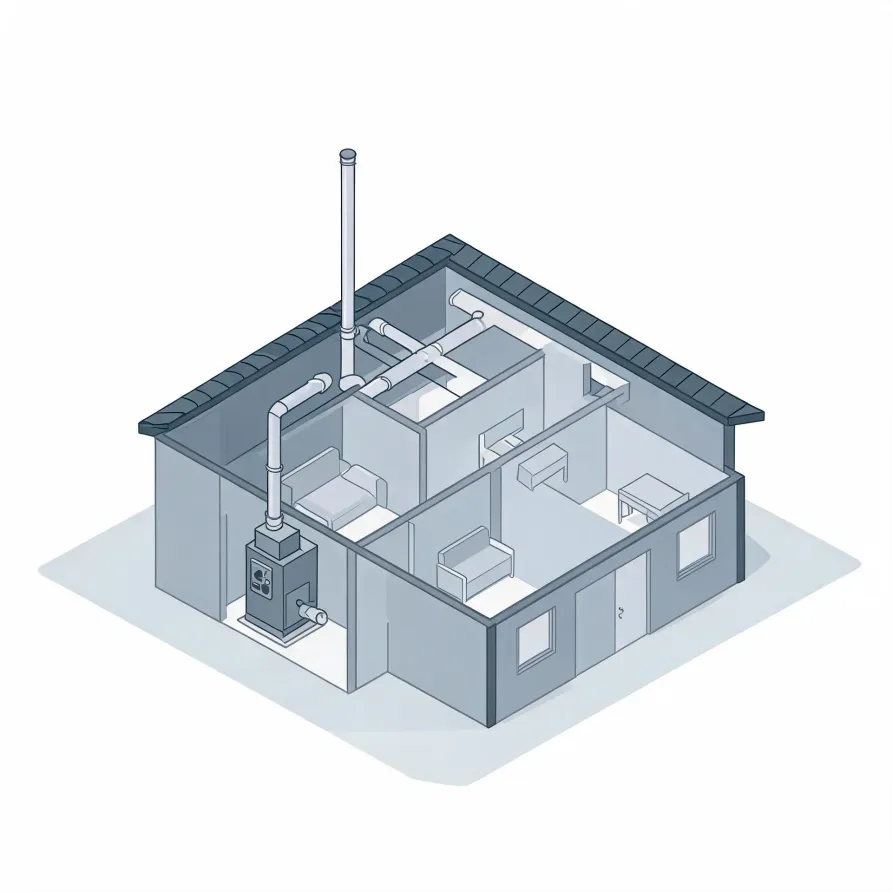
The furnace itself sits in a mechanical room, basement, or utility closet and burns gas to produce heat, which a blower fan then pushes through the house. The flue pipe runs from the furnace up through the roof or out through a wall, carrying combustion gases outside. Those two pieces are the core of what a contractor sets in place.
The thermostat mounts on an interior wall where it reads the air temperature and tells the furnace when to fire and when to shut off. At the furnace itself, a contractor also installs the air filter housing and connects the system to the existing supply and return air openings so conditioned air has a path through the house.
The drawing shows a typical layout, and a licensed contractor determines exactly what the installation involves in your home.
Find a contractor in Hancock CountyHancock County, by the numbers
40 severe weather events were recorded in Hancock County, Tennessee between 2015 and 2024.
NOAA National Centers for Environmental Information, Storm Events Database, bulk CSV export, events 2015-01-01 through 2024-12-31.Half the homes in Hancock County, Tennessee were built in 1982 or earlier (2020-2024 ACS 5-year).
U.S. Census Bureau, 2020-2024 American Community Survey 5-Year EstimatesHancock County, Tennessee holds 3,675 housing units (2020-2024 ACS 5-year).
U.S. Census Bureau, 2020-2024 American Community Survey 5-Year EstimatesOwners occupy 74.6% of the occupied homes in Hancock County, Tennessee (2020-2024 ACS 5-year).
U.S. Census Bureau, 2020-2024 American Community Survey 5-Year EstimatesCodes & Standards Governing Furnace Installation in Hancock County, Tennessee5 sourced rules and standards
What the installation looks like in Hancock County
Non-weatherized gas furnaces manufactured on or after November 19, 2015 must reach 80.0 percent AFUE.
Non-weatherized oil-fired furnaces manufactured on or after November 19, 2015 must reach 83.0 percent AFUE.
Mobile home gas furnaces manufactured on or after November 19, 2015 must reach 80.0 percent AFUE.
Non-weatherized gas furnaces manufactured on or after December 18, 2028 must reach 95.0 percent AFUE, up from the 80.0 percent minimum that applies to units manufactured before that date.
Licensing Rules for Hancock County, Tennessee
Tennessee licenses contractors by classification, and HVAC, refrigeration and gas piping is one of them — a sub-classification of mechanical contracting on the licence the Board for Licensing Contractors issues.
Severe Weather Events in Hancock County
Weather puts a load on heating equipment that varies by where you live. A furnace sized and installed for what Hancock County actually delivers will hold up differently than one spec'd for somewhere else.
40 severe weather events, 2015–2024. Source: NOAA National Centers for Environmental Information, Storm Events Database.