Tell us about the job
Takes about a minute. No obligation.
A contractor diagnosing a furnace in this county has to work out whether wear came from how hard the system ran or simply from how long it has been running. 99 severe weather events were recorded in Sullivan County, Tennessee between 2015 and 2024. At that rate, severe weather is a real part of operating here, but it sits in the middle of the national range, which means a failing heat exchanger or a worn inducer motor is not automatically a weather story. Age and how well the system was maintained over the years tend to explain more of what a contractor actually finds when they open the unit.
Furnaces in older housing stock accumulate a particular kind of repair problem: the parts still inside the unit are not all original, and they are not all the same generation either. Half the homes in Sullivan County, Tennessee were built in 1977 or earlier (2020-2024 ACS 5-year). A contractor who opens a furnace in a house from that era is looking at components that may have been swapped in at different points, and sourcing a match for any one of them means checking whether it is still manufactured. When a part turns out to be from a line that has since been discontinued, the repair either pivots to a compatible substitute or the scope of the job changes entirely.
The Parts of a Furnace a Contractor Checks First
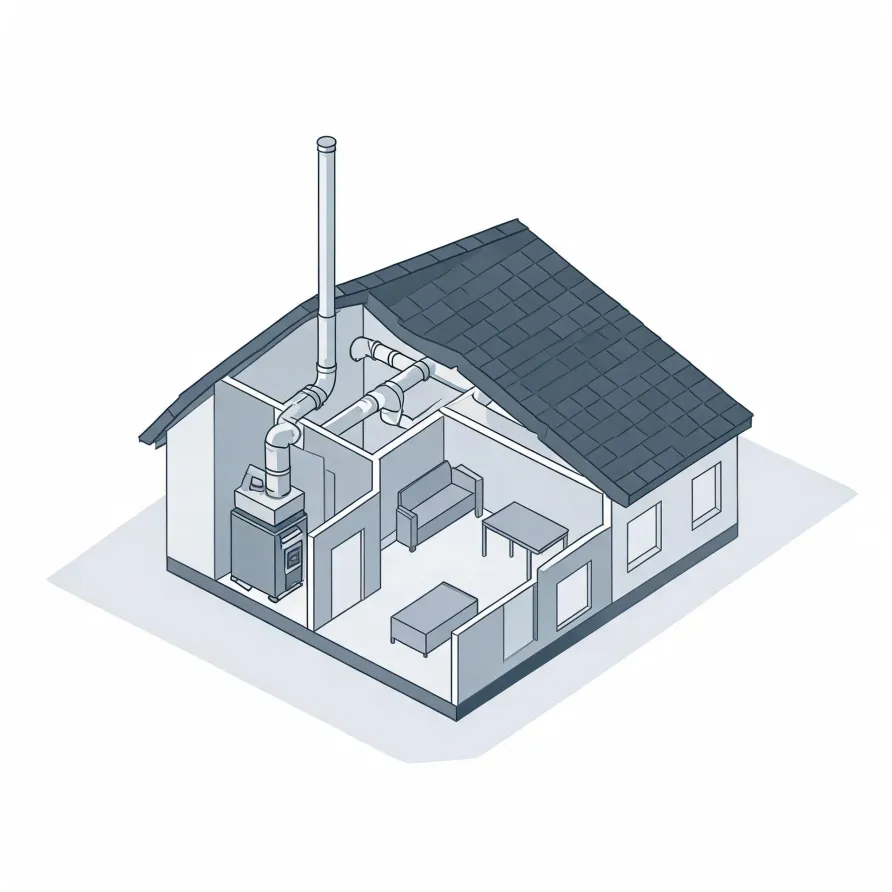
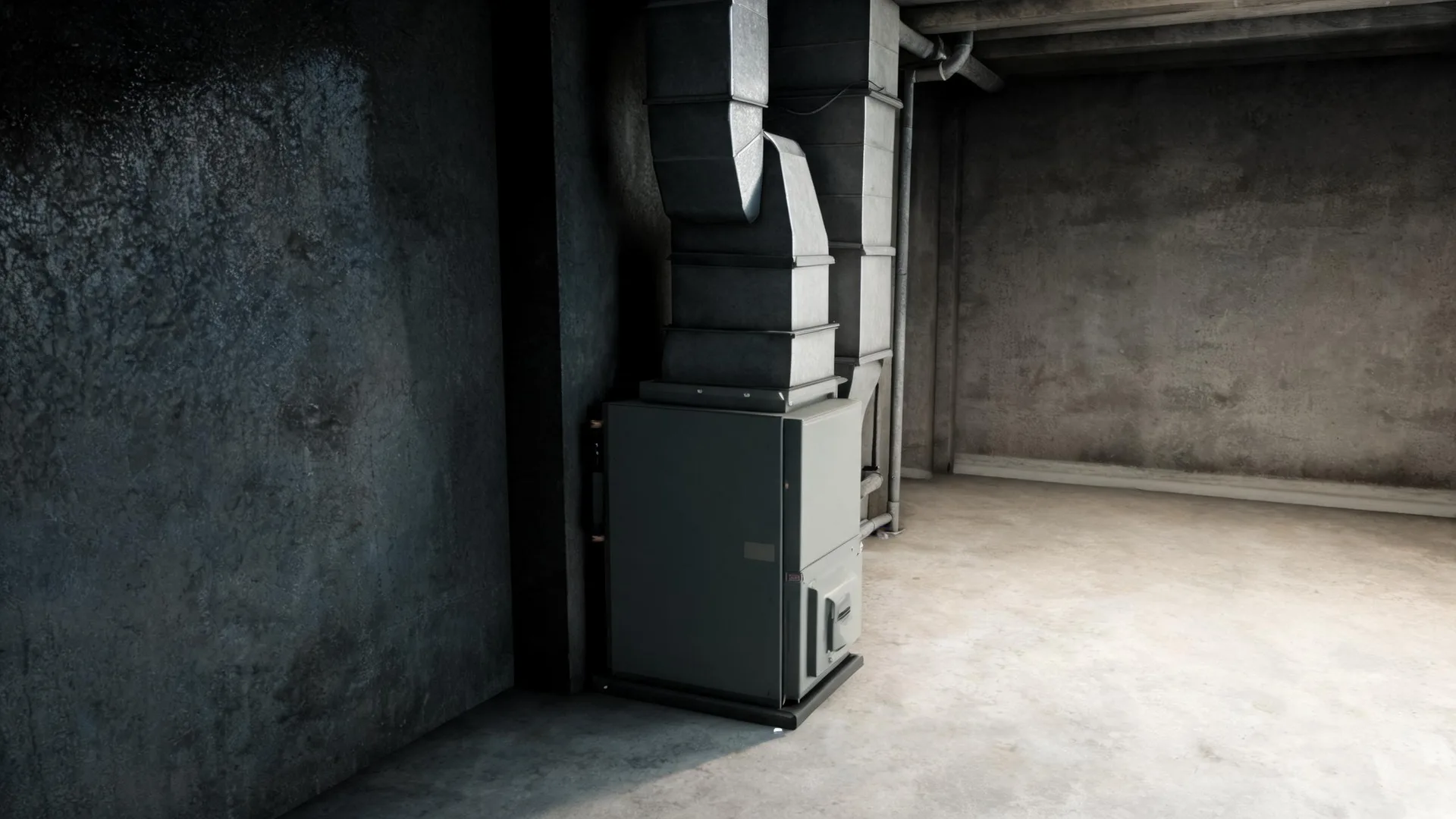
The furnace itself sits in a utility space, basement, or closet and is the unit that generates heat. Inside it, the heat exchanger is the piece a contractor goes to early when something is wrong: a crack or failure there affects both heating performance and air safety. The burners, which fire inside that exchanger, are another common source of trouble when heat output drops or the unit short-cycles.
The blower motor sits within the furnace cabinet and pushes conditioned air out through the supply side of the house. The flue pipe runs from the unit to an exterior vent and carries combustion gases out. The igniter and the flame sensor work together at startup, and either one can stop a furnace from firing even when everything else is sound.
The drawing shows a general layout of these components, and a licensed contractor determines what applies to the specific equipment and configuration in your home.
Find a contractor in Sullivan CountySullivan County, by the numbers
99 severe weather events were recorded in Sullivan County, Tennessee between 2015 and 2024.
NOAA National Centers for Environmental Information, Storm Events Database, bulk CSV export, events 2015-01-01 through 2024-12-31.Half the homes in Sullivan County, Tennessee were built in 1977 or earlier (2020-2024 ACS 5-year).
U.S. Census Bureau, 2020-2024 American Community Survey 5-Year EstimatesSullivan County, Tennessee holds 76,324 housing units (2020-2024 ACS 5-year).
U.S. Census Bureau, 2020-2024 American Community Survey 5-Year EstimatesOwners occupy 72.1% of the occupied homes in Sullivan County, Tennessee (2020-2024 ACS 5-year).
U.S. Census Bureau, 2020-2024 American Community Survey 5-Year EstimatesCodes & Standards Covering Furnace Repair in Sullivan County, Tennessee5 sourced rules and standards
What Happens When a Contractor Comes Out
Non-weatherized gas furnaces manufactured on or after November 19, 2015 must reach 80.0 percent AFUE.
Non-weatherized oil-fired furnaces manufactured on or after November 19, 2015 must reach 83.0 percent AFUE.
Mobile home gas furnaces manufactured on or after November 19, 2015 must reach 80.0 percent AFUE.
Non-weatherized gas furnaces manufactured on or after December 18, 2028 must reach 95.0 percent AFUE, up from the 80.0 percent minimum that applies to units manufactured before that date.
Licensing and Legal Requirements in Sullivan County, Tennessee
Tennessee licenses contractors by classification, and HVAC, refrigeration and gas piping is one of them — a sub-classification of mechanical contracting on the licence the Board for Licensing Contractors issues.
Severe Weather Events in Sullivan County
Hard weather puts real strain on heating equipment: pressure swings, power fluctuations, and sustained cold force furnaces to run harder and longer than they were sized for. How much of that your system absorbs depends on where it sits, which makes local weather history a practical part of understanding furnace repair demand in Sullivan County.
99 severe weather events, 2015–2024. Source: NOAA National Centers for Environmental Information, Storm Events Database.