Tell us about the job
Takes about a minute. No obligation.
A furnace repair call in Warren County starts with a question the weather alone cannot answer: why did this system fail? 81 severe weather events were recorded in Warren County, Tennessee between 2015 and 2024. At that rate, severe weather is an event here, not a standing condition, which means a contractor working through a failed heat exchanger or a cracked burner is looking first at how old the system is and how well it has been maintained. A homeowner who traces the failure back to the weather is likely passing over the real cause.
Furnace systems in houses built that long ago have often outlasted the parts supply built around them. Half the homes in Warren County, Tennessee were built in 1979 or earlier (2020-2024 ACS 5-year). When a contractor opens a furnace here, the question that decides the repair scope is whether the components the unit calls for are still being manufactured, or whether the job becomes a search for old-stock parts or a conversation about what comes next. That is a different problem than a system whose parts are still on a distributor's shelf.
The Parts of a Furnace a Contractor Checks First
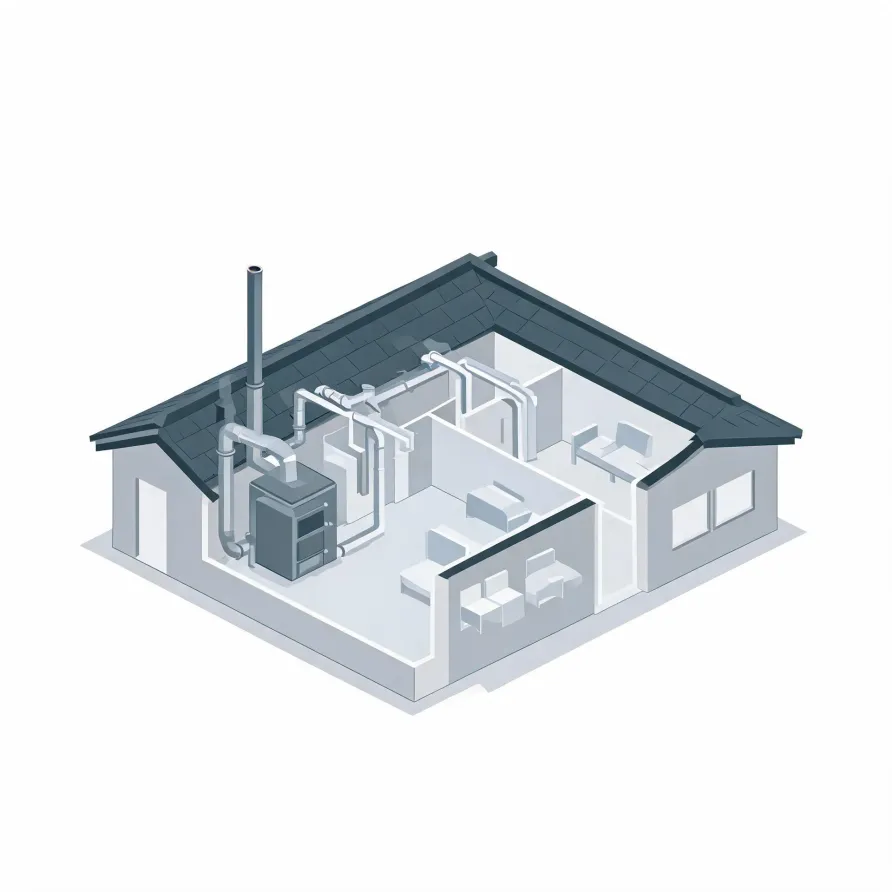
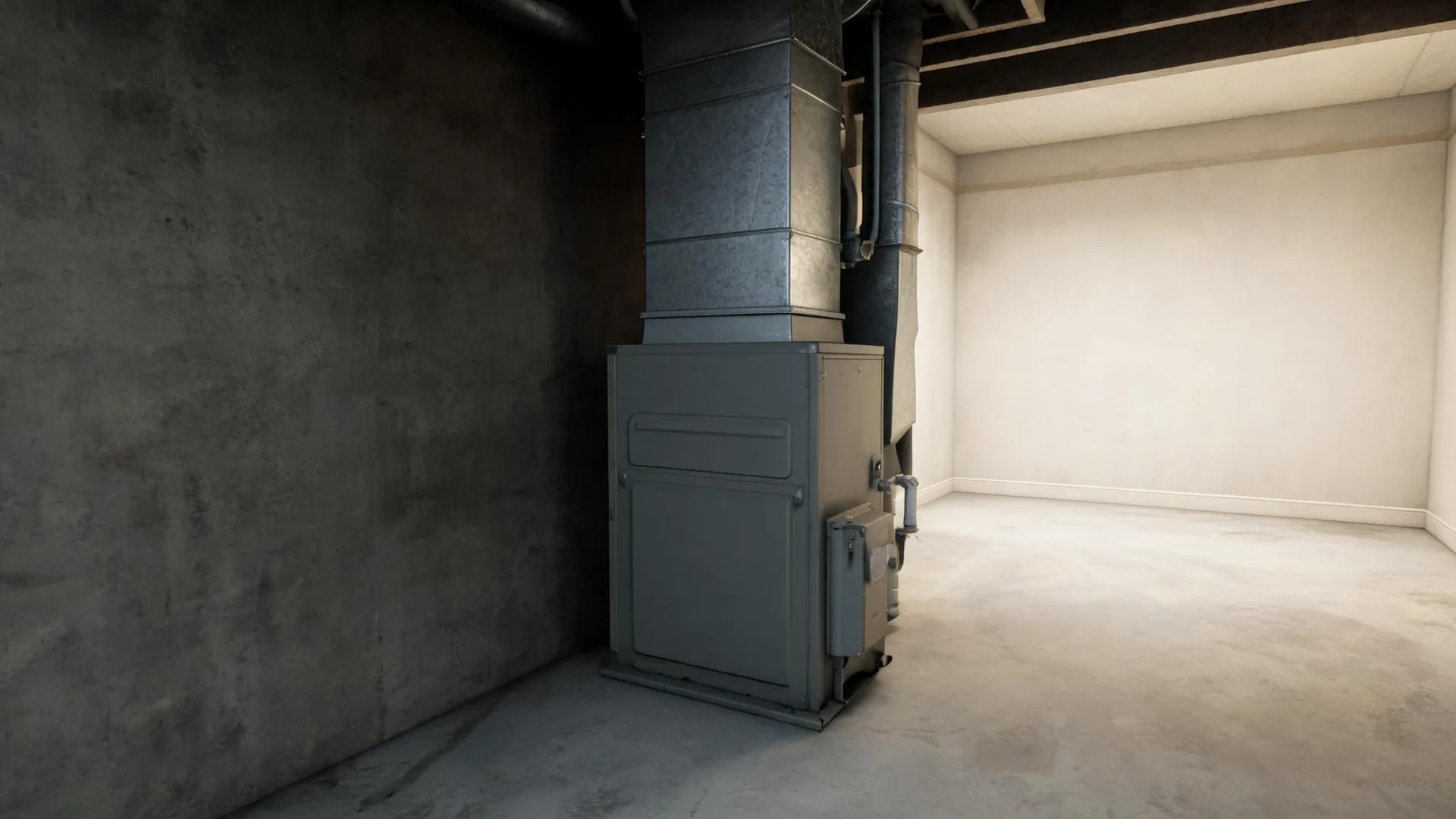
The furnace itself sits in a utility room, basement, or closet and is the piece a contractor goes to first. Inside it, the heat exchanger is the part that most often causes a shutdown. A cracked exchanger lets combustion gases into the living space, and a failed ignitor or faulty burner assembly stops the unit from firing at all.
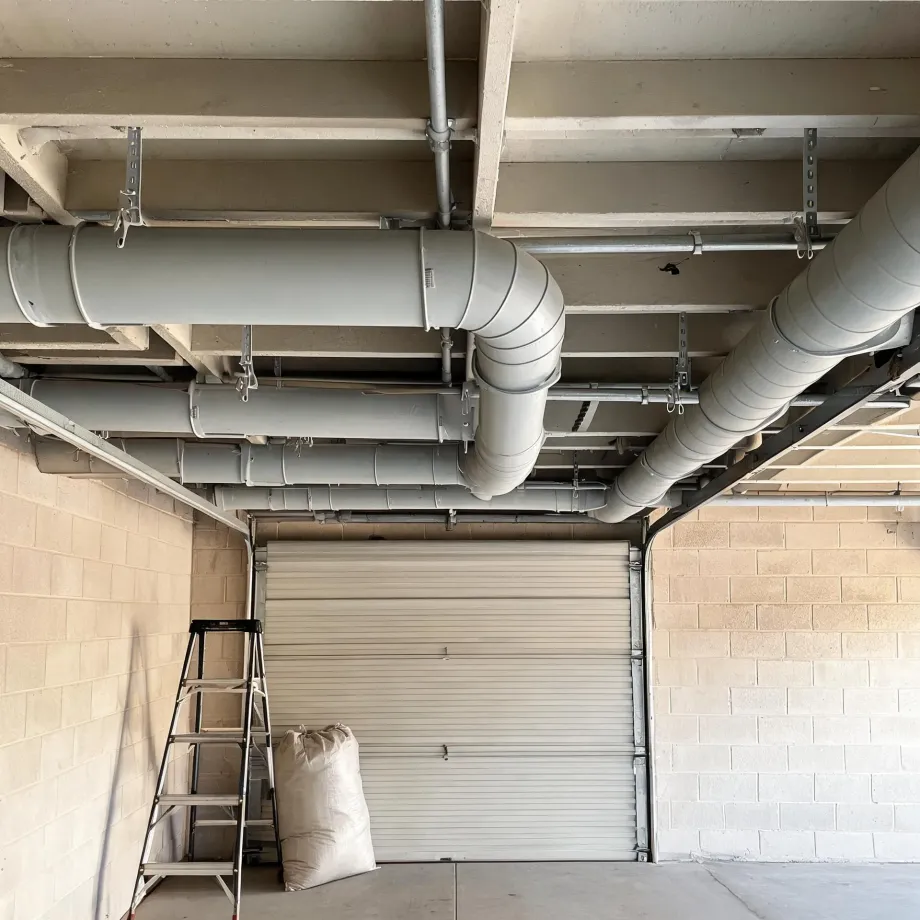
The blower motor and its fan wheel push conditioned air out through the supply side of the duct system. The flue pipe runs from the furnace cabinet to an exterior wall or roof and carries exhaust gases out of the house. The control board ties the components together, and when it faults, multiple parts can appear to fail even when they are fine on their own.
The drawing shows the general layout of a furnace system, and a licensed contractor determines what applies to your specific home and installation.
Find a contractor in Warren CountyWarren County, by the numbers
81 severe weather events were recorded in Warren County, Tennessee between 2015 and 2024.
NOAA National Centers for Environmental Information, Storm Events Database, bulk CSV export, events 2015-01-01 through 2024-12-31.Half the homes in Warren County, Tennessee were built in 1979 or earlier (2020-2024 ACS 5-year).
U.S. Census Bureau, 2020-2024 American Community Survey 5-Year EstimatesWarren County, Tennessee holds 18,537 housing units (2020-2024 ACS 5-year).
U.S. Census Bureau, 2020-2024 American Community Survey 5-Year EstimatesOwners occupy 72.4% of the occupied homes in Warren County, Tennessee (2020-2024 ACS 5-year).
U.S. Census Bureau, 2020-2024 American Community Survey 5-Year EstimatesCodes & Standards Behind Furnace Repair in Warren County, Tennessee5 sourced rules and standards
What Happens When the Contractor Arrives
Non-weatherized gas furnaces manufactured on or after November 19, 2015 must reach 80.0 percent AFUE.
Non-weatherized oil-fired furnaces manufactured on or after November 19, 2015 must reach 83.0 percent AFUE.
Mobile home gas furnaces manufactured on or after November 19, 2015 must reach 80.0 percent AFUE.
Non-weatherized gas furnaces manufactured on or after December 18, 2028 must reach 95.0 percent AFUE, up from the 80.0 percent minimum that applies to units manufactured before that date.
Licensing Rules for HVAC Work in Warren County, Tennessee
Tennessee licenses contractors by classification, and HVAC, refrigeration and gas piping is one of them — a sub-classification of mechanical contracting on the licence the Board for Licensing Contractors issues.
Severe Weather Events in Warren County
Weather puts real stress on heating equipment. Hard conditions push furnaces to run longer and harder, and that load accumulates over time in ways that show up as repairs.
81 severe weather events, 2015–2024. Source: NOAA National Centers for Environmental Information, Storm Events Database.