Tell us about the job
Takes about a minute. No obligation.
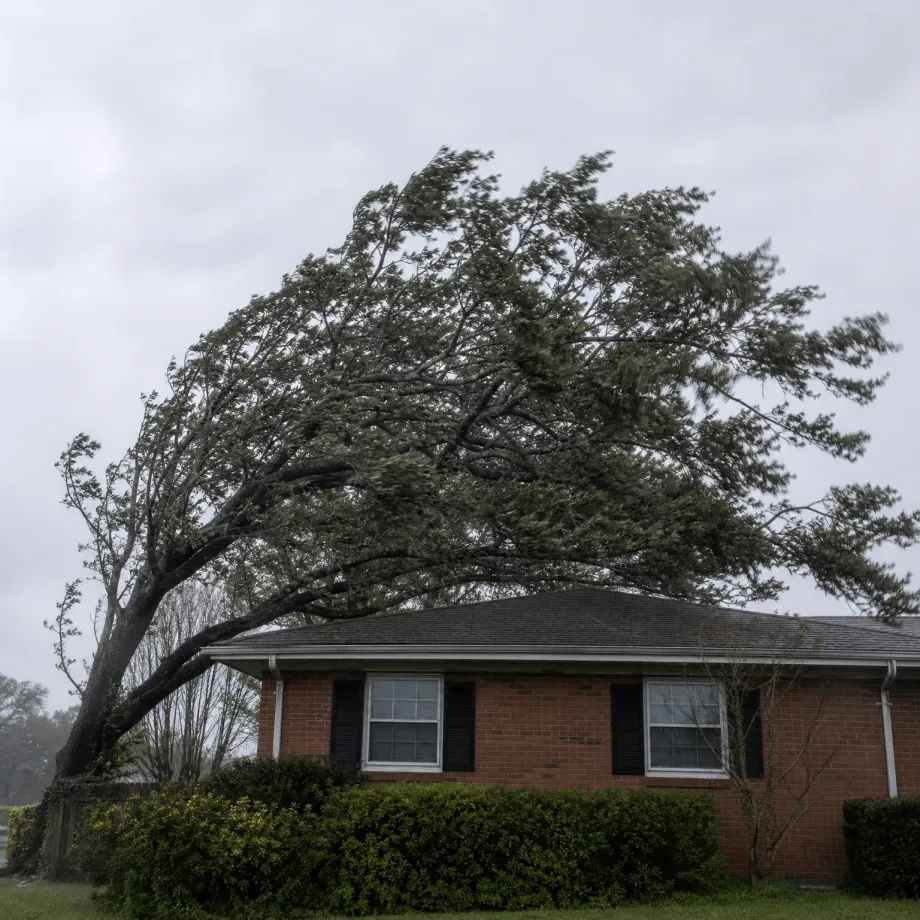
Sizing a furnace in Wayne County starts with the structure: room volume, insulation, duct layout, and how the house actually loses heat. 58 severe weather events were recorded in Wayne County, Tennessee between 2015 and 2024. At that rate, severe weather is an occasional fact of life here, not a standing operating condition, so a contractor's choices on equipment grade and install quality are driven by what the house demands rather than by accumulated weather load. A system that fails here failed because of how it was installed or how long it ran, and a quote that accounts for both will reflect that.
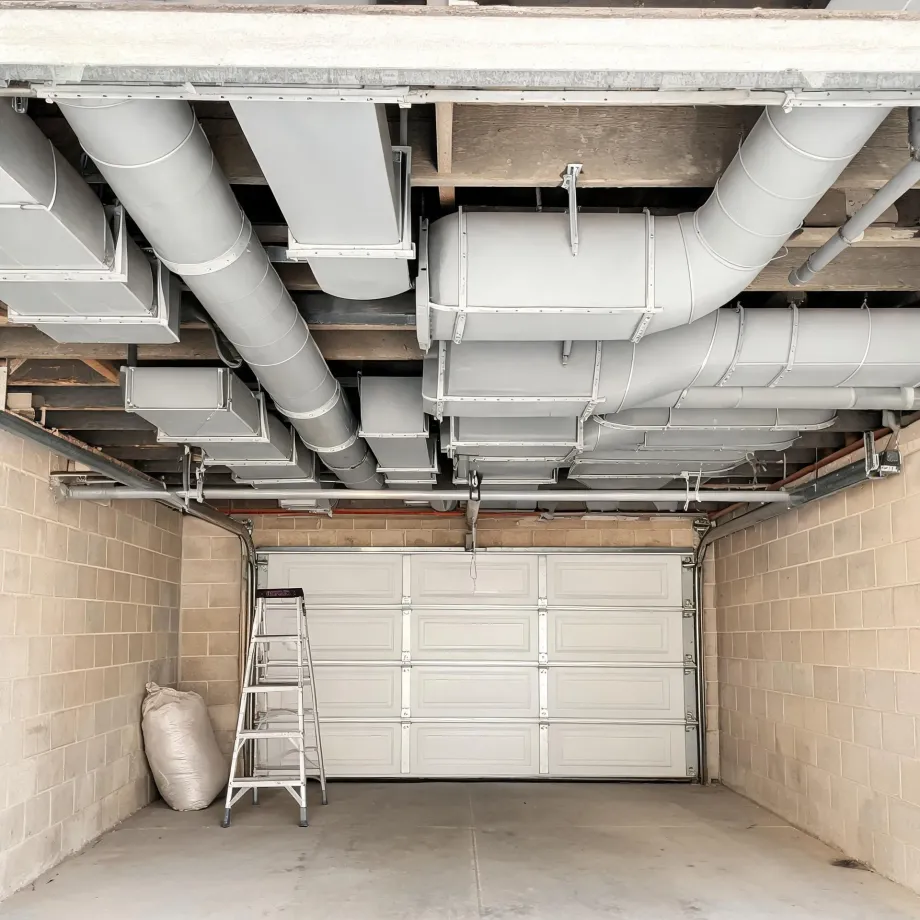
Ductwork laid down for a furnace that ran on different specifications than anything sold today is what a contractor finds in a large share of Wayne County houses. Half the homes in Wayne County, Tennessee were built in 1982 or earlier (2020-2024 ACS 5-year). That gap between what is in the walls and what a new furnace requires is where installation work gets complicated or stays straightforward. A contractor who opens the supply and return runs before quoting has the information that actually sets the price; one who prices the unit first and inspects the ducts second will revise that number.
What Gets Installed With a New Furnace
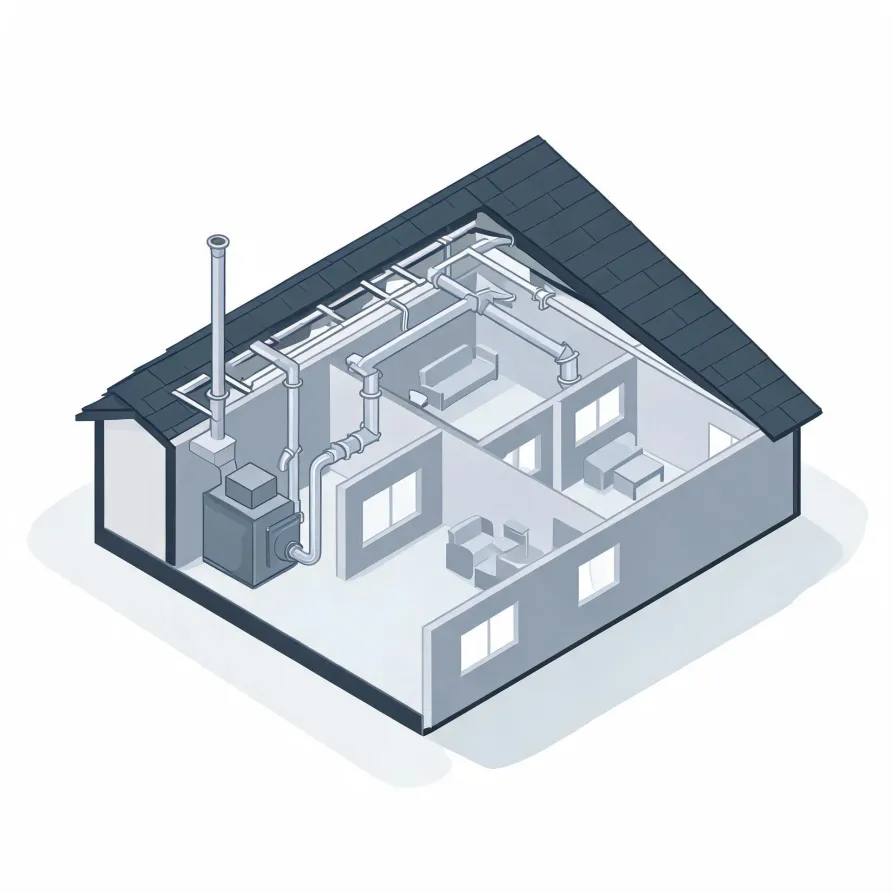
The furnace itself sits in a utility space, basement, or closet near the center of the house. It holds the heat exchanger and the burner assembly, which is where fuel is burned to produce heat. The blower motor lives inside the same cabinet, pulling air across the heat exchanger and pushing it into the supply side of the duct system.
The flue pipe runs from the furnace to an exterior wall or roofline, carrying combustion gases out of the house. Beside the furnace sits the air handler or filter cabinet, depending on configuration, and the thermostat mounts on an interior wall where it reads the air temperature of the living space and signals the furnace to run.
The drawing shows a typical layout, and a licensed contractor determines what applies to the specific configuration of your home.
Find a contractor in Wayne CountyWayne County, by the numbers
58 severe weather events were recorded in Wayne County, Tennessee between 2015 and 2024.
NOAA National Centers for Environmental Information, Storm Events Database, bulk CSV export, events 2015-01-01 through 2024-12-31.Half the homes in Wayne County, Tennessee were built in 1982 or earlier (2020-2024 ACS 5-year).
U.S. Census Bureau, 2020-2024 American Community Survey 5-Year EstimatesWayne County, Tennessee holds 7,211 housing units (2020-2024 ACS 5-year).
U.S. Census Bureau, 2020-2024 American Community Survey 5-Year EstimatesOwners occupy 80.2% of the occupied homes in Wayne County, Tennessee (2020-2024 ACS 5-year).
U.S. Census Bureau, 2020-2024 American Community Survey 5-Year EstimatesCodes & Standards Governing Furnace Installation in Wayne County, Tennessee5 sourced rules and standards
What happens when the contractor comes out
Non-weatherized gas furnaces manufactured on or after November 19, 2015 must reach 80.0 percent AFUE.
Non-weatherized oil-fired furnaces manufactured on or after November 19, 2015 must reach 83.0 percent AFUE.
Mobile home gas furnaces manufactured on or after November 19, 2015 must reach 80.0 percent AFUE.
Non-weatherized gas furnaces manufactured on or after December 18, 2028 must reach 95.0 percent AFUE, up from the 80.0 percent minimum that applies to units manufactured before that date.
Licensing and Legal Requirements in Wayne County, Tennessee
Tennessee licenses contractors by classification, and HVAC, refrigeration and gas piping is one of them — a sub-classification of mechanical contracting on the licence the Board for Licensing Contractors issues.
Severe Weather Events in Wayne County
Weather puts real hours on heating equipment. A furnace that carries a household through hard winters and volatile shoulder seasons works harder than the calendar alone suggests, and that workload shapes what sizing and installation decisions make sense for Wayne County homes.
58 severe weather events, 2015–2024. Source: NOAA National Centers for Environmental Information, Storm Events Database.