Tell us about the job
Takes about a minute. No obligation.
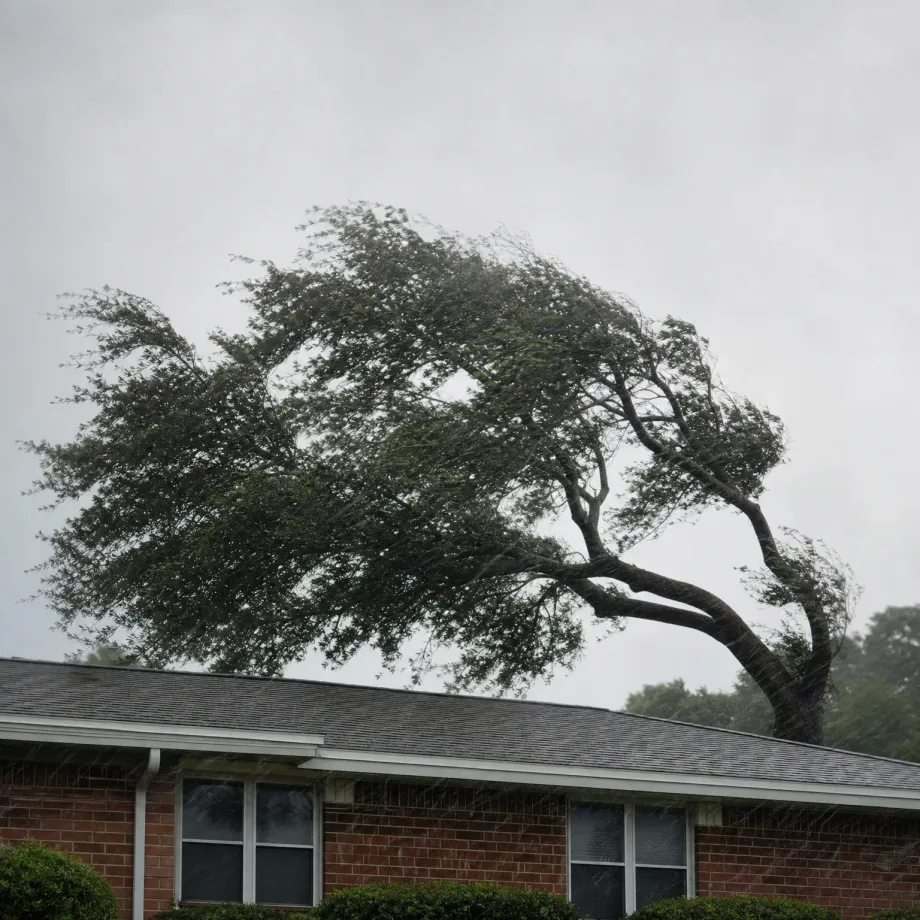
A contractor quoting a furnace install in Lawrence County has to treat the local climate as a working variable, not background noise. 209 severe weather events were recorded in Lawrence County, Tennessee between 2015 and 2024. At that rate, severe weather is a standing condition here, and a furnace sized or sealed for gentler air movement will show the strain in joints, seams, and heat exchanger welds years ahead of schedule. Sizing from a catalog without accounting for what the air in this county actually does to equipment produces an install that fits on paper and underperforms in practice.
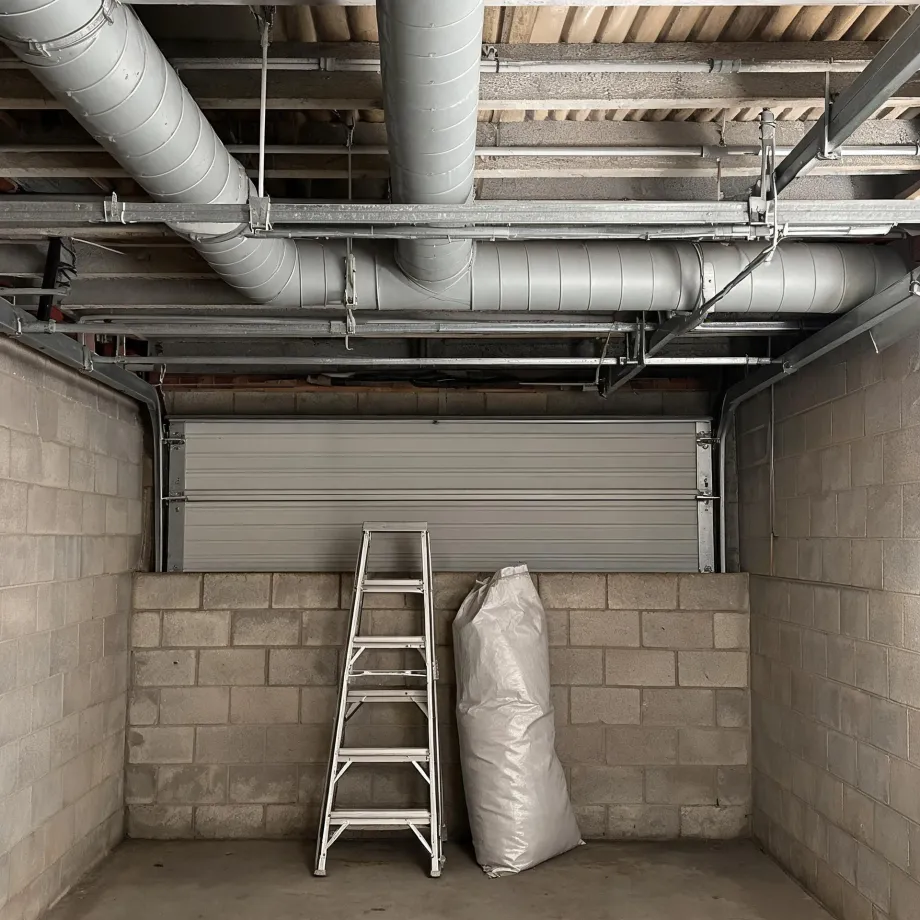
Ducts laid down for equipment of that era were sized to move air at pressures and volumes that differ from what a modern furnace expects. Half the homes in Lawrence County, Tennessee were built in 1983 or earlier (2020-2024 ACS 5-year). A contractor installing a new furnace here checks whether the existing duct system will carry it before anything else gets priced, because a mismatch there changes the scope of the job in ways the equipment selection alone does not. The electrical panel gets the same look, since what a newer unit draws has to clear what the house was wired to deliver.
What Gets Installed With a New Furnace
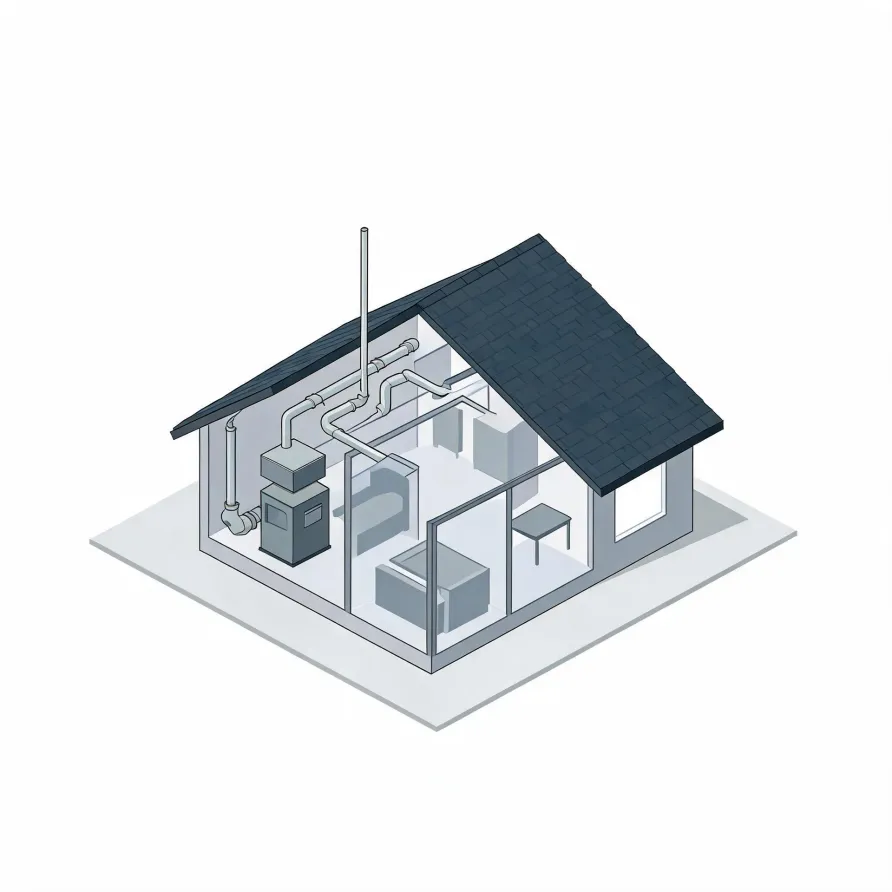
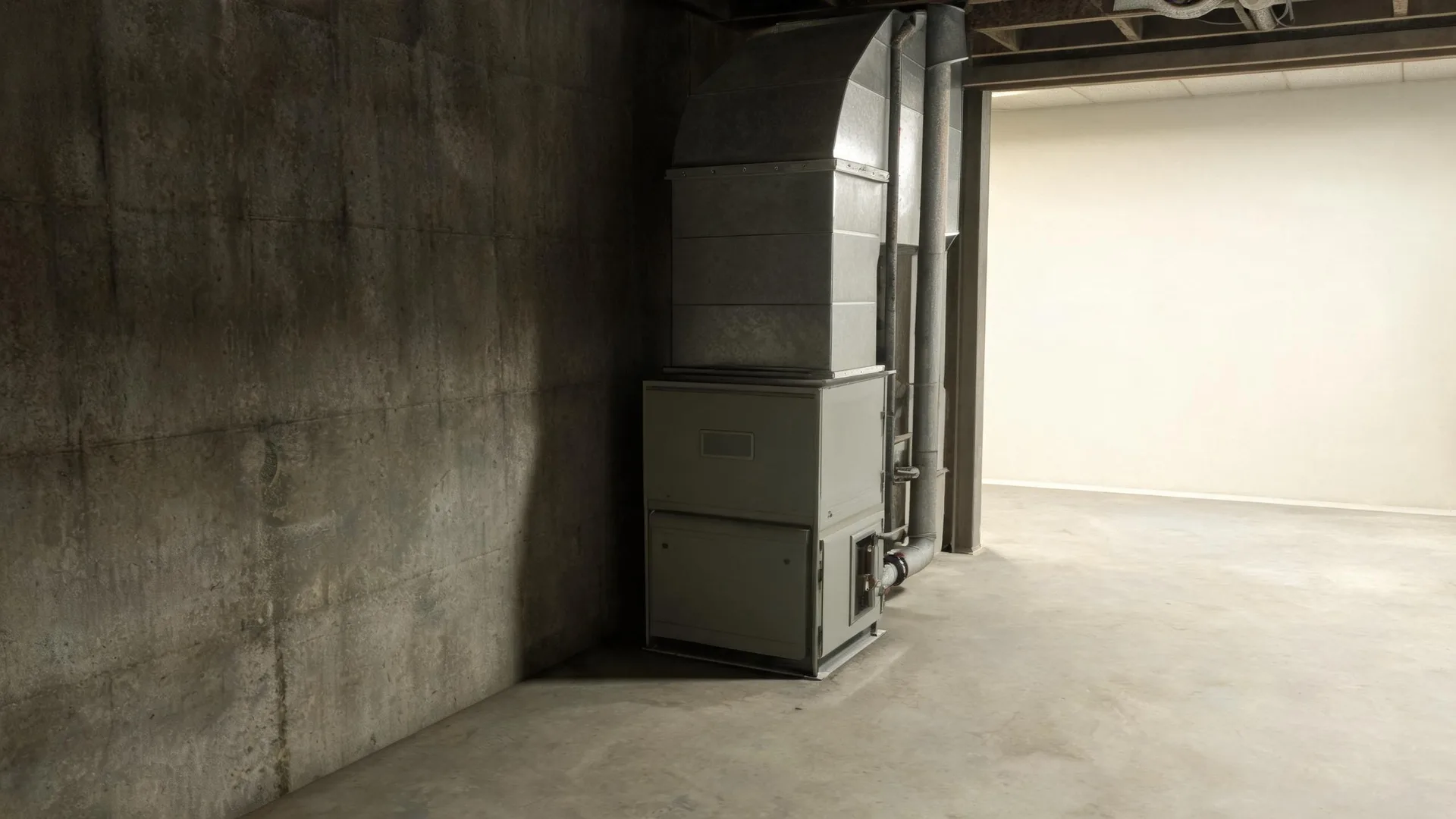
The furnace itself sits in a basement, utility closet, or mechanical room and is the unit a homeowner would walk up to and recognize. Inside that cabinet, a heat exchanger, a burner assembly, and a blower motor are all mounted together. The furnace is what a contractor sets in place first, since every other piece of the installation connects back to it.
A flue pipe runs from the furnace to an exterior wall or through the roof to vent combustion gases out of the house. Alongside it, a gas line ties into the burner, and a thermostat mounts on an interior wall to give the homeowner control over when the system runs.
The drawing shows a general layout of these components, and a licensed contractor determines exactly how each one is configured for this house.
Find a contractor in Lawrence CountyLawrence County, by the numbers
209 severe weather events were recorded in Lawrence County, Tennessee between 2015 and 2024.
NOAA National Centers for Environmental Information, Storm Events Database, bulk CSV export, events 2015-01-01 through 2024-12-31.Half the homes in Lawrence County, Tennessee were built in 1983 or earlier (2020-2024 ACS 5-year).
U.S. Census Bureau, 2020-2024 American Community Survey 5-Year EstimatesLawrence County, Tennessee holds 18,730 housing units (2020-2024 ACS 5-year).
U.S. Census Bureau, 2020-2024 American Community Survey 5-Year EstimatesOwners occupy 77.6% of the occupied homes in Lawrence County, Tennessee (2020-2024 ACS 5-year).
U.S. Census Bureau, 2020-2024 American Community Survey 5-Year EstimatesFurnace Installation Rules for Lawrence County, Tennessee5 codes, standards, and laws
What Happens Once a Contractor Shows Up
Non-weatherized gas furnaces manufactured on or after November 19, 2015 must reach 80.0 percent AFUE.
Non-weatherized oil-fired furnaces manufactured on or after November 19, 2015 must reach 83.0 percent AFUE.
Mobile home gas furnaces manufactured on or after November 19, 2015 must reach 80.0 percent AFUE.
Non-weatherized gas furnaces manufactured on or after December 18, 2028 must reach 95.0 percent AFUE, up from the 80.0 percent minimum that applies to units manufactured before that date.
Licensing Rules for HVAC Work in Lawrence County, Tennessee
Tennessee licenses contractors by classification, and HVAC, refrigeration and gas piping is one of them — a sub-classification of mechanical contracting on the licence the Board for Licensing Contractors issues.
Severe Weather Events in Lawrence County
Weather in Lawrence County puts real demands on heating equipment. How hard a furnace works over its life is a local question, and installation decisions made here should reflect what the climate actually does.
209 severe weather events, 2015–2024. Source: NOAA National Centers for Environmental Information, Storm Events Database.