Tell us about the job
Takes about a minute. No obligation.

A contractor quoting a furnace installation in Lincoln County has to account for what the heating season here actually asks of a system. 143 severe weather events were recorded in Lincoln County, Tennessee between 2015 and 2024. At that rate, severe weather is part of the normal load a furnace runs against, which means sizing and sealing decisions carry more consequence than they would somewhere the weather seldom pushes equipment hard. A unit that fits the square footage on paper can still fall short if the install does not account for how hard Lincoln County winters actually drive the system.
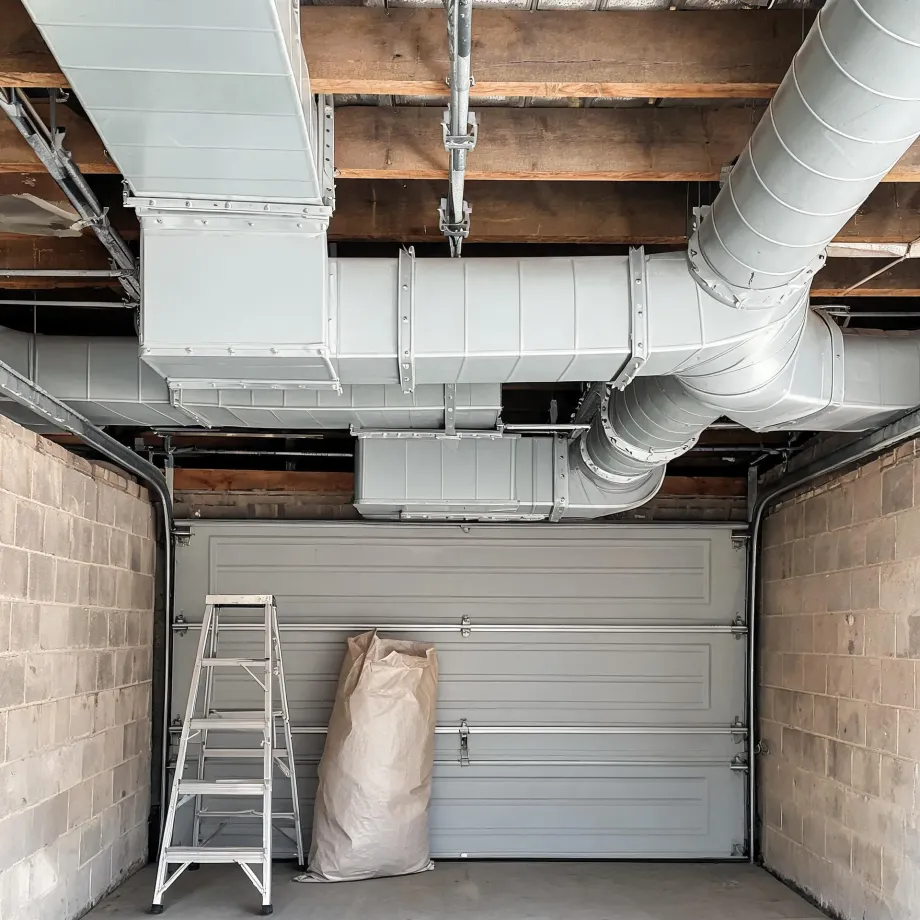
Ductwork designed for an older system carries assumptions about airflow, return sizing, and leakage that a new furnace will expose within its first heating season. Half the homes in Lincoln County, Tennessee were built in 1985 or earlier (2020-2024 ACS 5-year). A contractor pricing a furnace installation in Lincoln County has to assess what that existing duct system will actually do under the load a new unit places on it, and that assessment shapes the quote more than the equipment selection does. Some duct runs pass without modification. Others need resealing, resizing, or replacement before the new furnace performs to its rated output.
What Gets Installed With a New Furnace
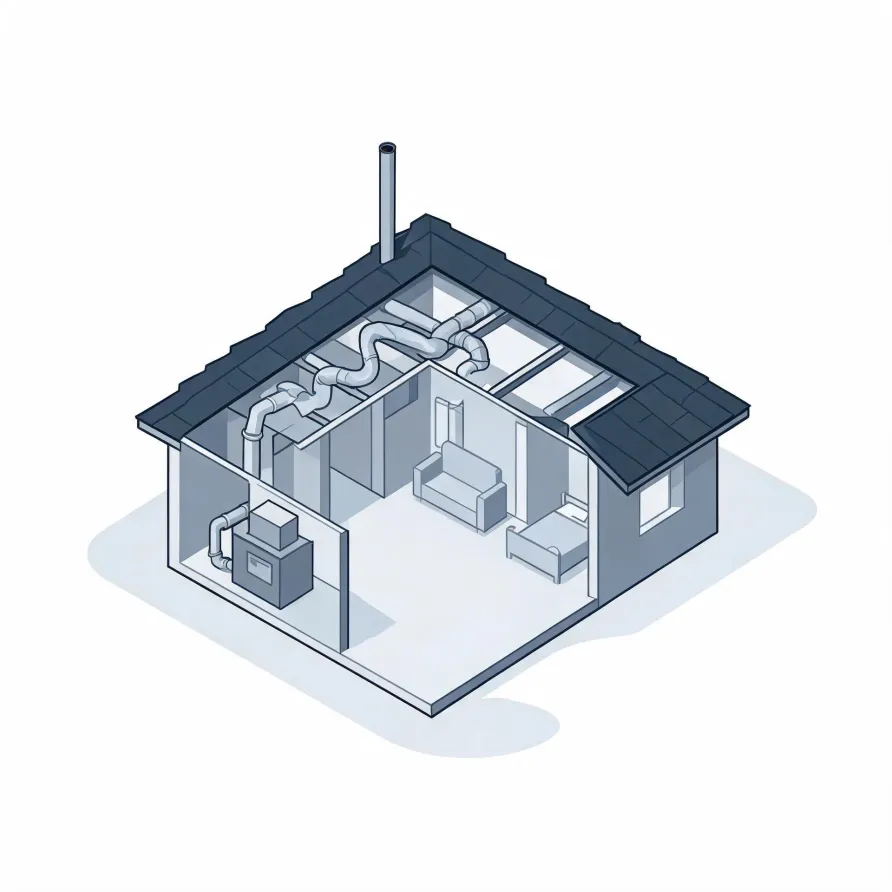
The furnace itself sits in a mechanical room, basement, or utility closet and is the unit that produces heat for the house. Attached directly to it is the air handler, which pulls household air across the heat exchanger and pushes warmed air back out through the supply side of the duct system.
The flue pipe runs from the furnace to an exterior wall or roof and carries combustion exhaust out of the house. The thermostat mounts on an interior wall and is the control point that tells the furnace when to fire and when to shut off. A condensate drain line also connects to high-efficiency units, routing moisture produced during operation to a floor drain.
The drawing shows a typical layout, and a licensed contractor determines what applies to the specific conditions in your home.
Find a contractor in Lincoln CountyLincoln County, by the numbers
143 severe weather events were recorded in Lincoln County, Tennessee between 2015 and 2024.
NOAA National Centers for Environmental Information, Storm Events Database, bulk CSV export, events 2015-01-01 through 2024-12-31.Half the homes in Lincoln County, Tennessee were built in 1985 or earlier (2020-2024 ACS 5-year).
U.S. Census Bureau, 2020-2024 American Community Survey 5-Year EstimatesLincoln County, Tennessee holds 16,291 housing units (2020-2024 ACS 5-year).
U.S. Census Bureau, 2020-2024 American Community Survey 5-Year EstimatesOwners occupy 75.8% of the occupied homes in Lincoln County, Tennessee (2020-2024 ACS 5-year).
U.S. Census Bureau, 2020-2024 American Community Survey 5-Year EstimatesCodes & Standards Covering Furnace Installation in Lincoln County, Tennessee5 sourced rules and standards
What to Expect When a Contractor Installs Your System
Non-weatherized gas furnaces manufactured on or after November 19, 2015 must reach 80.0 percent AFUE.
Non-weatherized oil-fired furnaces manufactured on or after November 19, 2015 must reach 83.0 percent AFUE.
Mobile home gas furnaces manufactured on or after November 19, 2015 must reach 80.0 percent AFUE.
Non-weatherized gas furnaces manufactured on or after December 18, 2028 must reach 95.0 percent AFUE, up from the 80.0 percent minimum that applies to units manufactured before that date.
Licensing Rules for HVAC Work in Lincoln County, Tennessee
Tennessee licenses contractors by classification, and HVAC, refrigeration and gas piping is one of them — a sub-classification of mechanical contracting on the licence the Board for Licensing Contractors issues.
Severe Weather History in Lincoln County
Weather puts a measurable load on heating equipment, and that load shapes what a furnace needs to handle over its working life. Sizing and installation decisions that ignore local conditions are decisions made blind, which is why the record below is part of what Tennessee Furnace Service brings into the conversation.
143 severe weather events, 2015–2024. Source: NOAA National Centers for Environmental Information, Storm Events Database.