Tell us about the job
Takes about a minute. No obligation.
Sizing a furnace for a Loudon County home is a local calculation, not a standard one. 79 severe weather events were recorded in Loudon County, Tennessee between 2015 and 2024. At that rate, a contractor working an installation here has to think about how hard this climate runs heating equipment and pick equipment and duct work that holds up under it. A unit that is correctly matched to the house and to what the weather here demands will cycle and distribute heat the way it was designed to.
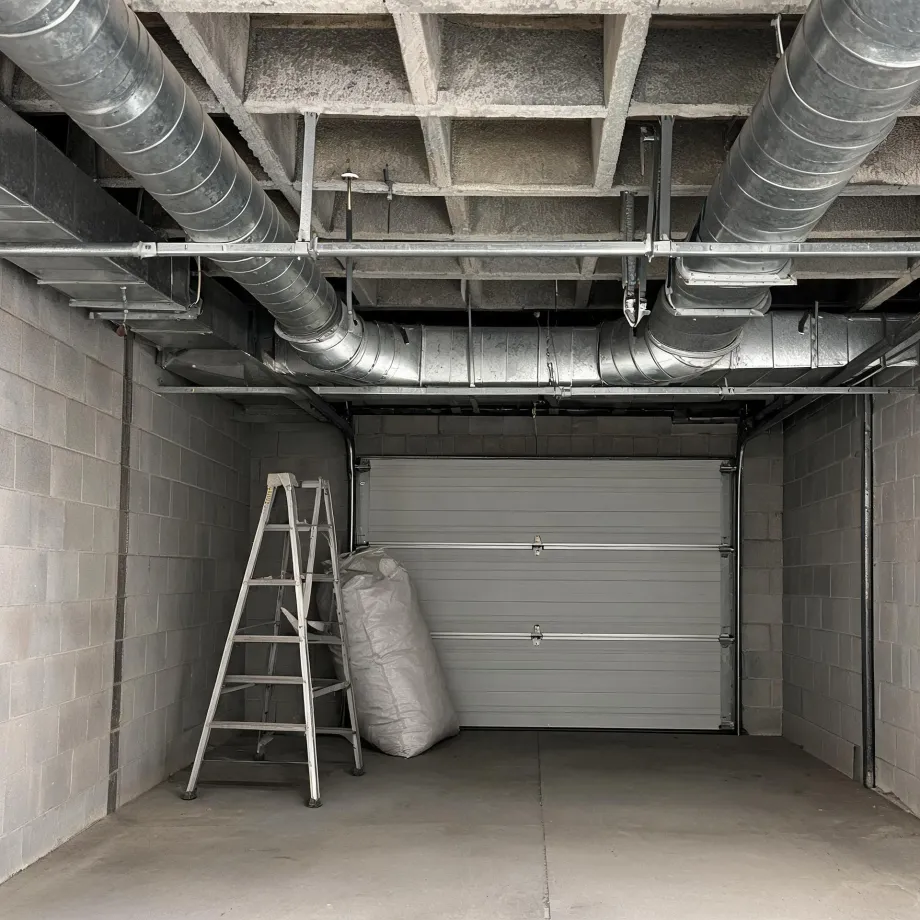
Ductwork laid when much of this county's housing was new was designed around the equipment of its era, and a furnace going in today draws air and distributes heat on different terms. Half the homes in Loudon County, Tennessee were built in 1992 or earlier (2020-2024 ACS 5-year). That gap is where a furnace installation either stays simple or picks up additional scope. A contractor pulling permits here will check whether the existing trunk lines, branch runs, and return sizing will carry the new unit's airflow before anything else gets quoted. If they do not, new ductwork or modifications go on the estimate.
What Gets Installed With a New Furnace
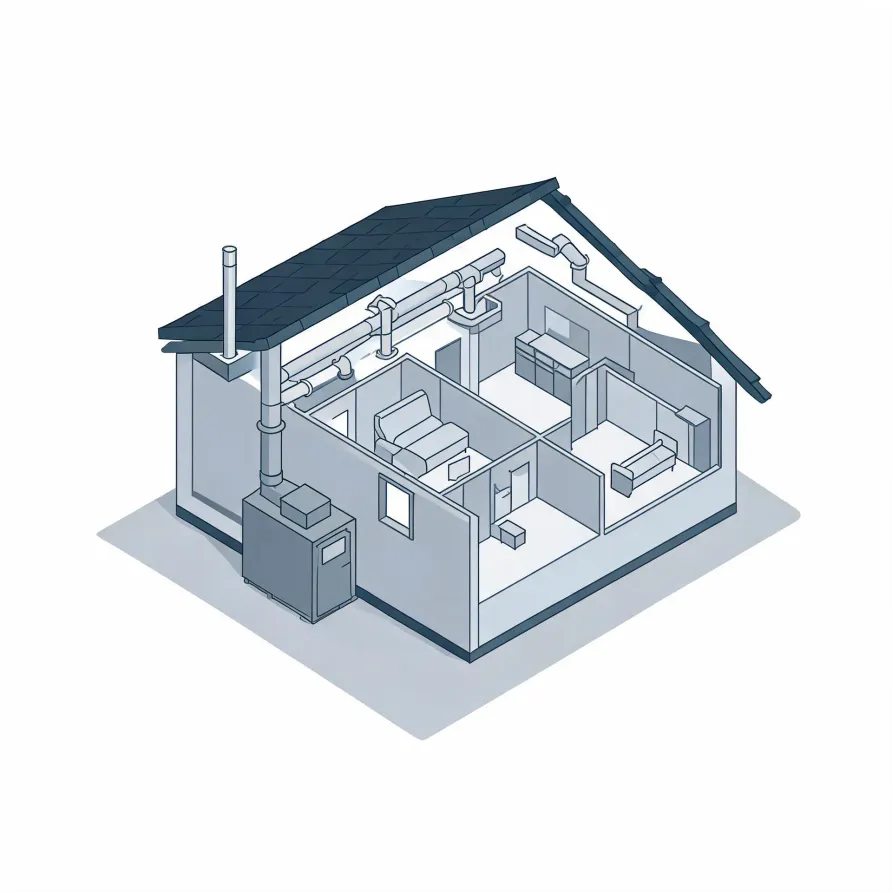
The furnace itself sits in the basement, utility room, or crawlspace and is the core unit a contractor places first. Attached to it is the flue or venting pipe, which runs through the wall or up through the roofline to carry combustion gases out of the house. Together these two pieces form the heart of what is going in.
The air handler or blower compartment, built into or directly beside the furnace cabinet, pushes conditioned air into the duct openings. The thermostat mounts on an interior wall and gives the homeowner a way to set and read temperatures. A contractor also connects the gas line fitting at the furnace and positions the filter housing where air enters the return side of the unit.
The drawing shows a typical layout, and a licensed contractor determines exactly which components and configurations apply to this house.
Find a contractor in Loudon CountyLoudon County, by the numbers
79 severe weather events were recorded in Loudon County, Tennessee between 2015 and 2024.
NOAA National Centers for Environmental Information, Storm Events Database, bulk CSV export, events 2015-01-01 through 2024-12-31.Half the homes in Loudon County, Tennessee were built in 1992 or earlier (2020-2024 ACS 5-year).
U.S. Census Bureau, 2020-2024 American Community Survey 5-Year EstimatesLoudon County, Tennessee holds 26,043 housing units (2020-2024 ACS 5-year).
U.S. Census Bureau, 2020-2024 American Community Survey 5-Year EstimatesOwners occupy 80.3% of the occupied homes in Loudon County, Tennessee (2020-2024 ACS 5-year).
U.S. Census Bureau, 2020-2024 American Community Survey 5-Year EstimatesFurnace Installation Rules for Loudon County, Tennessee5 codes and standards
What the installation looks like in Loudon County
Non-weatherized gas furnaces manufactured on or after November 19, 2015 must reach 80.0 percent AFUE.
Non-weatherized oil-fired furnaces manufactured on or after November 19, 2015 must reach 83.0 percent AFUE.
Mobile home gas furnaces manufactured on or after November 19, 2015 must reach 80.0 percent AFUE.
Non-weatherized gas furnaces manufactured on or after December 18, 2028 must reach 95.0 percent AFUE, up from the 80.0 percent minimum that applies to units manufactured before that date.
Licensing and Legal Requirements for HVAC Work in Loudon County, Tennessee
Tennessee licenses contractors by classification, and HVAC, refrigeration and gas piping is one of them — a sub-classification of mechanical contracting on the licence the Board for Licensing Contractors issues.
Severe Weather Events in Loudon County
Weather extremes put real strain on heating equipment, shortening the gap between installations and driving what a system needs to handle year after year. How hard Loudon County pushes that equipment is a local fact, and it shapes the conversation any contractor here should be having with you.
79 severe weather events, 2015–2024. Source: NOAA National Centers for Environmental Information, Storm Events Database.