Tell us about the job
Takes about a minute. No obligation.
A contractor quoting a furnace installation in Monroe County has to account for what the local climate actually demands before settling on equipment size or duct configuration. 85 severe weather events were recorded in Monroe County, Tennessee between 2015 and 2024. At that rate, severe weather is a standing feature of operating conditions here, not a rare disruption, and a furnace that was sized or installed without that load in mind will run harder than its design assumes. Heat exchangers and blower motors carry the difference. A contractor will look at the existing setup and price the replacement around what the climate has already asked of it.
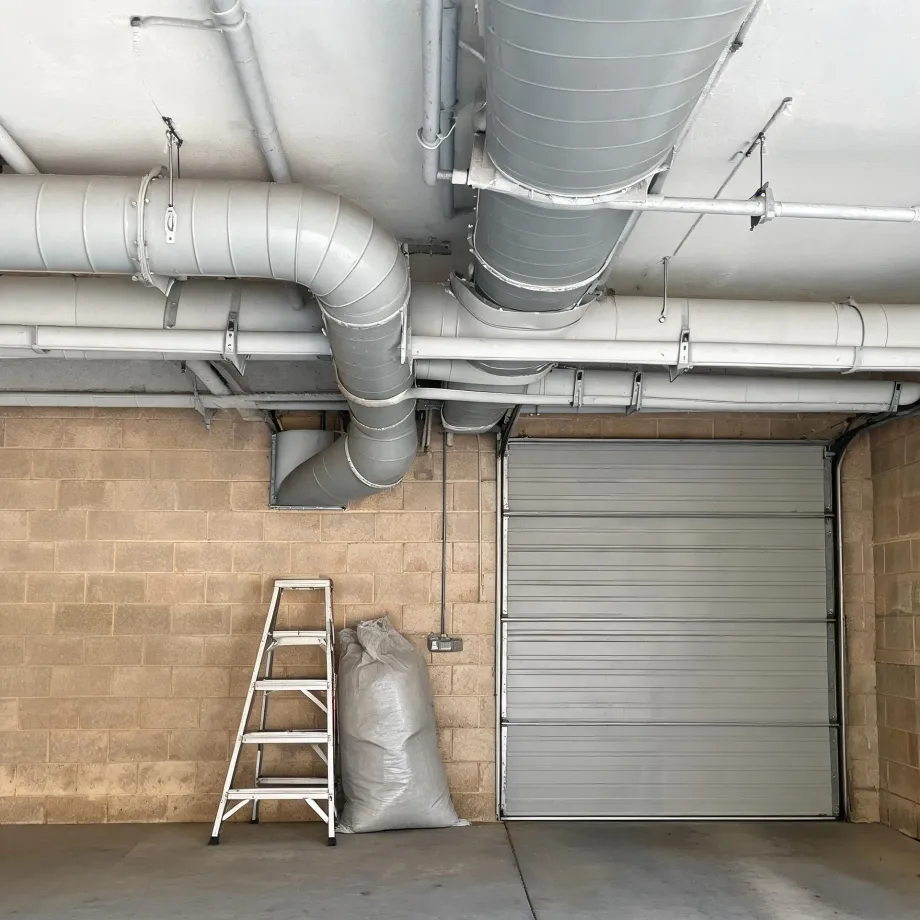
Ductwork sized and routed for an older generation of furnaces does not automatically carry a modern system at the right static pressure, and in Monroe County that gap is where a furnace installation is won or lost. Half the homes in Monroe County, Tennessee were built in 1991 or earlier (2020-2024 ACS 5-year). A house built to that vintage was ducted before current efficiency ratings changed what a furnace actually moves through the supply and return runs. A contractor who pulls the old unit without walking the duct layout first is pricing into a problem they have not measured yet.
What Gets Installed With a New Furnace
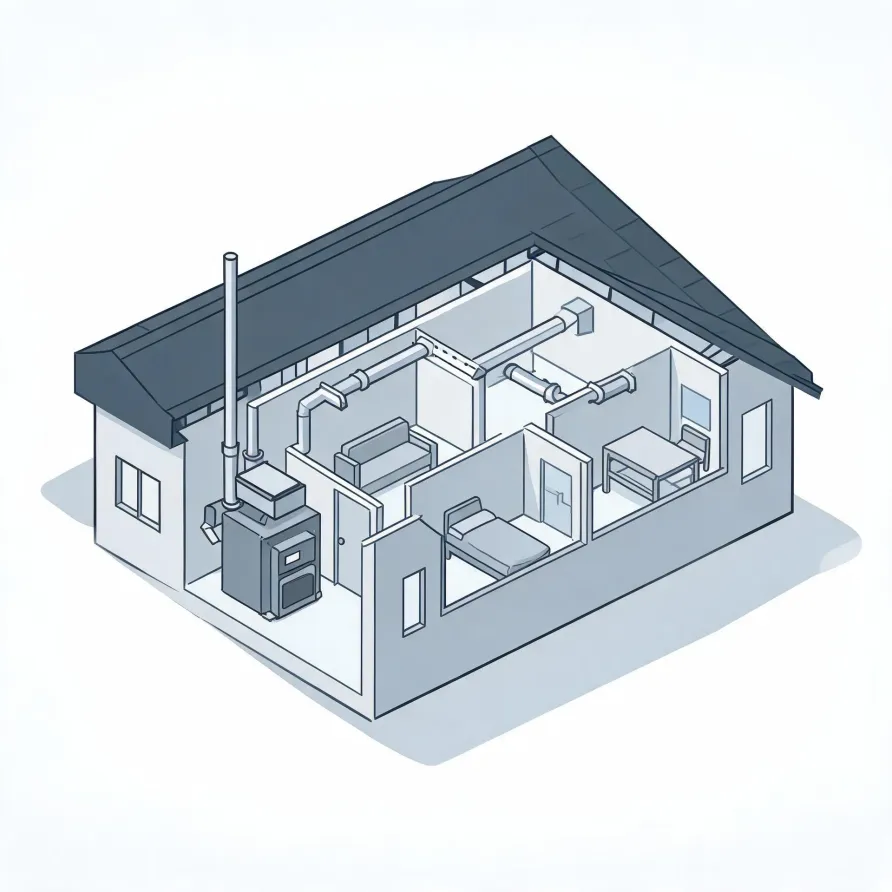
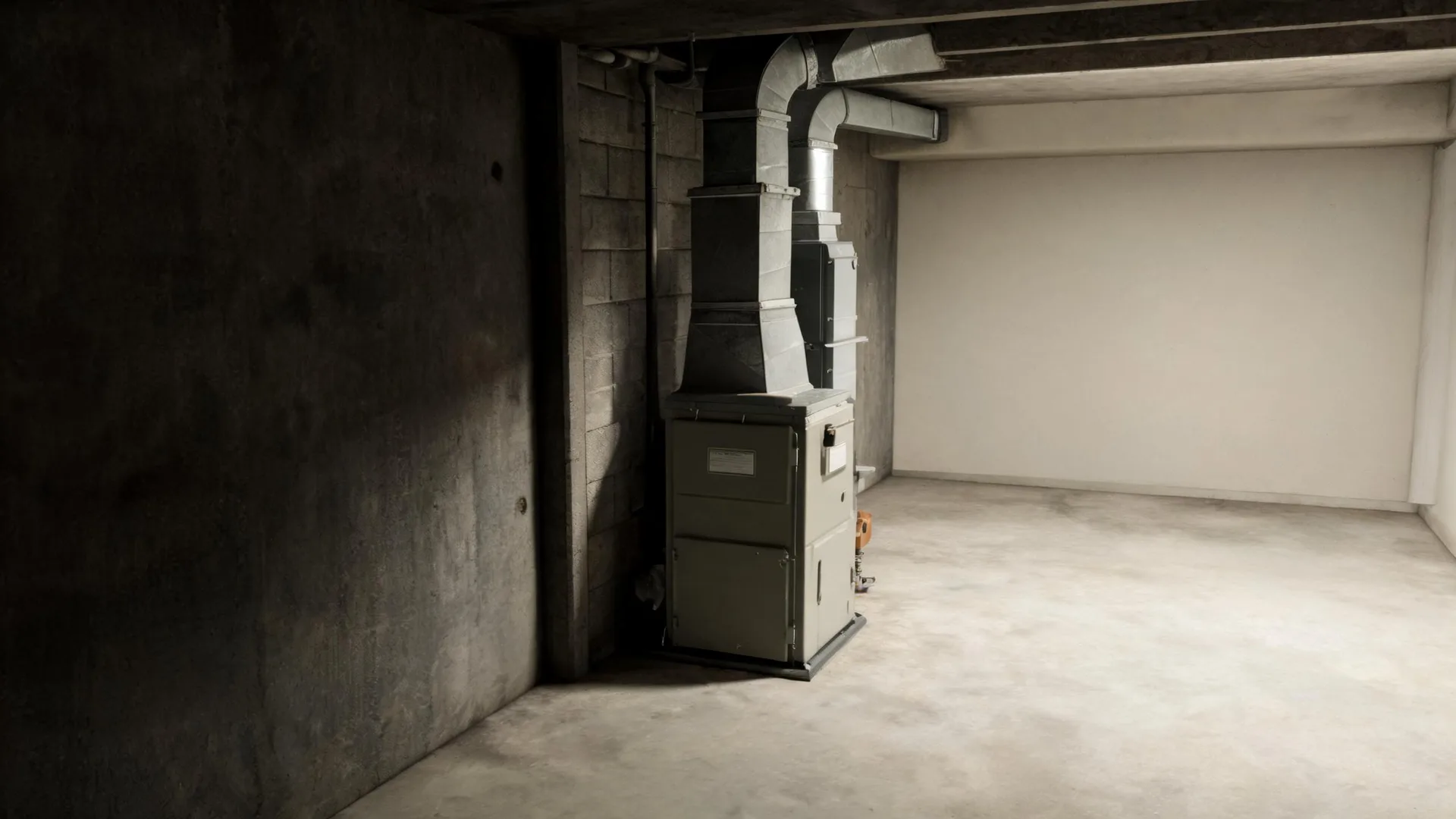
The furnace itself sits inside the home, most often in a basement, utility closet, or crawlspace, and it is the unit that generates heat by burning fuel or running electrical elements through a heat exchanger. The air handler, which may be built into the furnace cabinet or stand beside it, draws return air across that exchanger and pushes warmed air back into the house.
The flue or exhaust vent runs from the furnace through an exterior wall or up through the roofline, carrying combustion gases out of the living space. A thermostat mounts on an interior wall and serves as the control point, telling the furnace when to fire and when to shut off.
The drawing shows a typical layout, and a licensed contractor determines what the specific configuration looks like in your home.
Find a contractor in Monroe CountyMonroe County, Tennessee, by the numbers
85 severe weather events were recorded in Monroe County, Tennessee between 2015 and 2024.
NOAA National Centers for Environmental Information, Storm Events Database, bulk CSV export, events 2015-01-01 through 2024-12-31.Half the homes in Monroe County, Tennessee were built in 1991 or earlier (2020-2024 ACS 5-year).
U.S. Census Bureau, 2020-2024 American Community Survey 5-Year EstimatesMonroe County, Tennessee holds 21,764 housing units (2020-2024 ACS 5-year).
U.S. Census Bureau, 2020-2024 American Community Survey 5-Year EstimatesOwners occupy 72.2% of the occupied homes in Monroe County, Tennessee (2020-2024 ACS 5-year).
U.S. Census Bureau, 2020-2024 American Community Survey 5-Year EstimatesCodes & Standards Governing Furnace Installation in Monroe County, Tennessee5 sourced rules and standards
What the Installation Actually Looks Like
Non-weatherized gas furnaces manufactured on or after November 19, 2015 must reach 80.0 percent AFUE.
Non-weatherized oil-fired furnaces manufactured on or after November 19, 2015 must reach 83.0 percent AFUE.
Mobile home gas furnaces manufactured on or after November 19, 2015 must reach 80.0 percent AFUE.
Non-weatherized gas furnaces manufactured on or after December 18, 2028 must reach 95.0 percent AFUE, up from the 80.0 percent minimum that applies to units manufactured before that date.
Licensing Rules for HVAC Work in Monroe County, Tennessee
Tennessee licenses contractors by classification, and HVAC, refrigeration and gas piping is one of them — a sub-classification of mechanical contracting on the licence the Board for Licensing Contractors issues.
Severe Weather Events in Monroe County
Weather places real demand on heating equipment, from how hard a furnace has to work to how long it lasts. What happens outside in Monroe County shapes what a furnace faces inside, and that makes local installation choices matter.
85 severe weather events, 2015–2024. Source: NOAA National Centers for Environmental Information, Storm Events Database.