Tell us about the job
Takes about a minute. No obligation.
A contractor quoting a furnace installation in Weakley County starts with the house itself: its age, its existing ductwork, and what the old unit tells them about how the structure actually holds heat. 80 severe weather events were recorded in Weakley County, Tennessee between 2015 and 2024. At that rate, severe weather is an occasional fact of life here, not a grinding condition that shapes every sizing decision. A system that has underperformed was almost certainly let down by installation quality or deferred maintenance, and a replacement job gets sized to the building, not to a weather record that seldom drove the original unit hard.
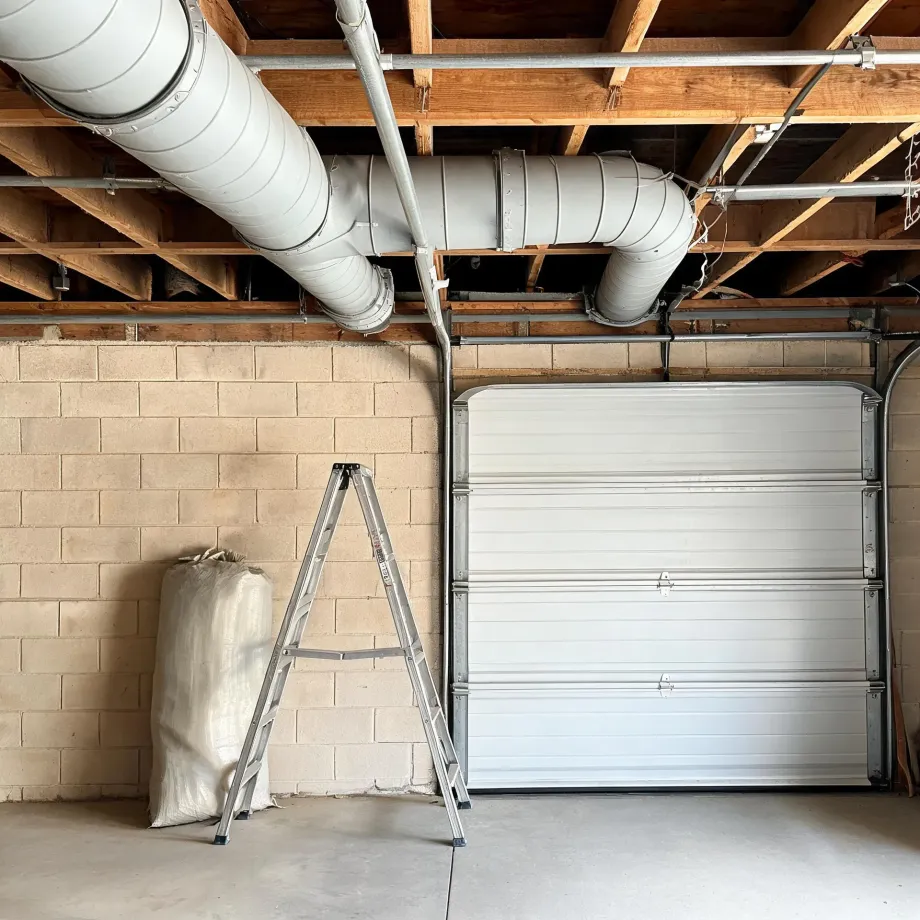
Ductwork sized for older equipment is the part of a furnace installation that settles what the job actually costs and how long it runs. Half the homes in Weakley County, Tennessee were built in 1977 or earlier (2020-2024 ACS 5-year). That vintage of construction was ducted before modern residential load calculations became standard practice, which means the trunk lines and branch runs in place were sized for systems with different airflow demands than what contractors install today. A contractor pulling the old furnace may find the duct system carries a new unit without modification, or may find it does not. The electrical service is the second variable: panel capacity and the circuit feeding the furnace both have to match what the new equipment draws.
What Gets Installed With a New Furnace
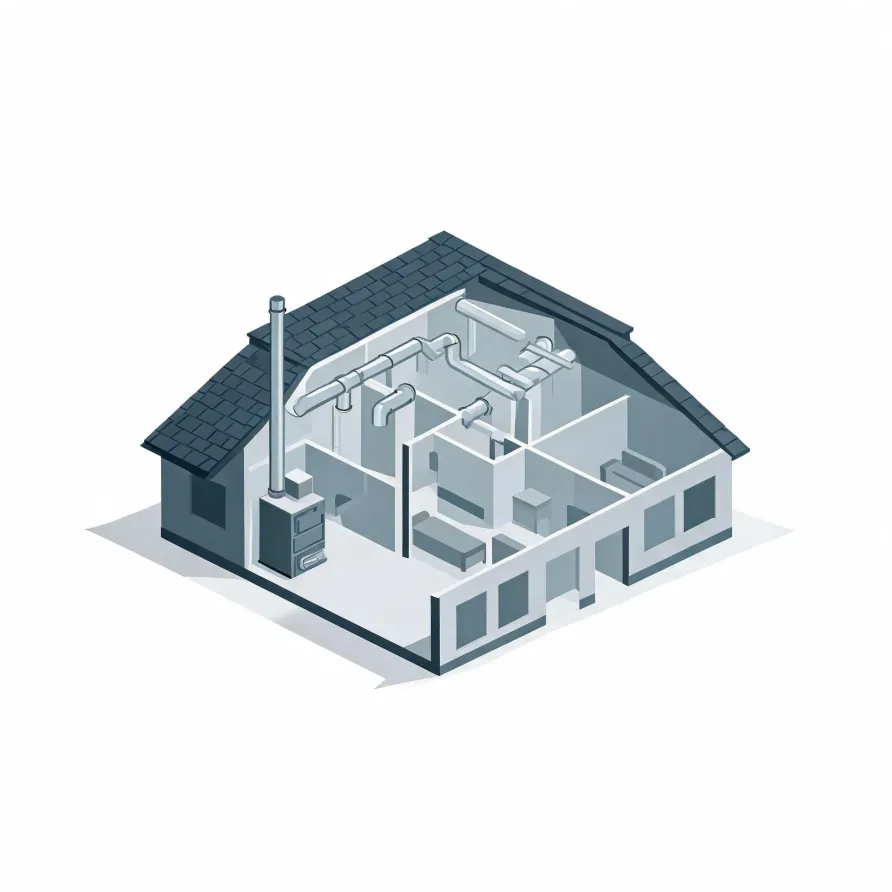
The furnace itself sits in a mechanical room, basement, or utility closet and is the box that generates heat. Attached to it is the flue or exhaust vent, which runs through the house and exits at the roof or an exterior wall to carry combustion gases out. A new installation also includes the plenum, the sheet-metal chamber that sits directly on top of the furnace and feeds warm air into the supply duct runs.
The blower motor lives inside the furnace cabinet and pushes air through the whole system once the burners have done their work. At the other end of the air path, the return-air box pulls household air back to the furnace to be heated again. The thermostat mounts on an interior wall and is the control point that tells the furnace when to fire and when to stop.
The drawing shows a typical layout, and a licensed contractor determines exactly which components and configurations apply to your house.
Find a contractor in Weakley CountyWeakley County, by the numbers
80 severe weather events were recorded in Weakley County, Tennessee between 2015 and 2024.
NOAA National Centers for Environmental Information, Storm Events Database, bulk CSV export, events 2015-01-01 through 2024-12-31.Half the homes in Weakley County, Tennessee were built in 1977 or earlier (2020-2024 ACS 5-year).
U.S. Census Bureau, 2020-2024 American Community Survey 5-Year EstimatesWeakley County, Tennessee holds 15,056 housing units (2020-2024 ACS 5-year).
U.S. Census Bureau, 2020-2024 American Community Survey 5-Year EstimatesOwners occupy 66.3% of the occupied homes in Weakley County, Tennessee (2020-2024 ACS 5-year).
U.S. Census Bureau, 2020-2024 American Community Survey 5-Year EstimatesFurnace Installation Rules for Weakley County, Tennessee5 codes, standards, and laws
What the installation actually looks like
Non-weatherized gas furnaces manufactured on or after November 19, 2015 must reach 80.0 percent AFUE.
Non-weatherized oil-fired furnaces manufactured on or after November 19, 2015 must reach 83.0 percent AFUE.
Mobile home gas furnaces manufactured on or after November 19, 2015 must reach 80.0 percent AFUE.
Non-weatherized gas furnaces manufactured on or after December 18, 2028 must reach 95.0 percent AFUE, up from the 80.0 percent minimum that applies to units manufactured before that date.
Licensing Rules for Weakley County, Tennessee
Tennessee licenses contractors by classification, and HVAC, refrigeration and gas piping is one of them — a sub-classification of mechanical contracting on the licence the Board for Licensing Contractors issues.
Severe Weather Events in Weakley County
Weather puts real load on heating equipment, and that load is not the same everywhere. A furnace sized and installed for what Weakley County's climate actually delivers will last longer and run more efficiently than one treated as a generic job.
80 severe weather events, 2015–2024. Source: NOAA National Centers for Environmental Information, Storm Events Database.