Tell us about the job
Takes about a minute. No obligation.
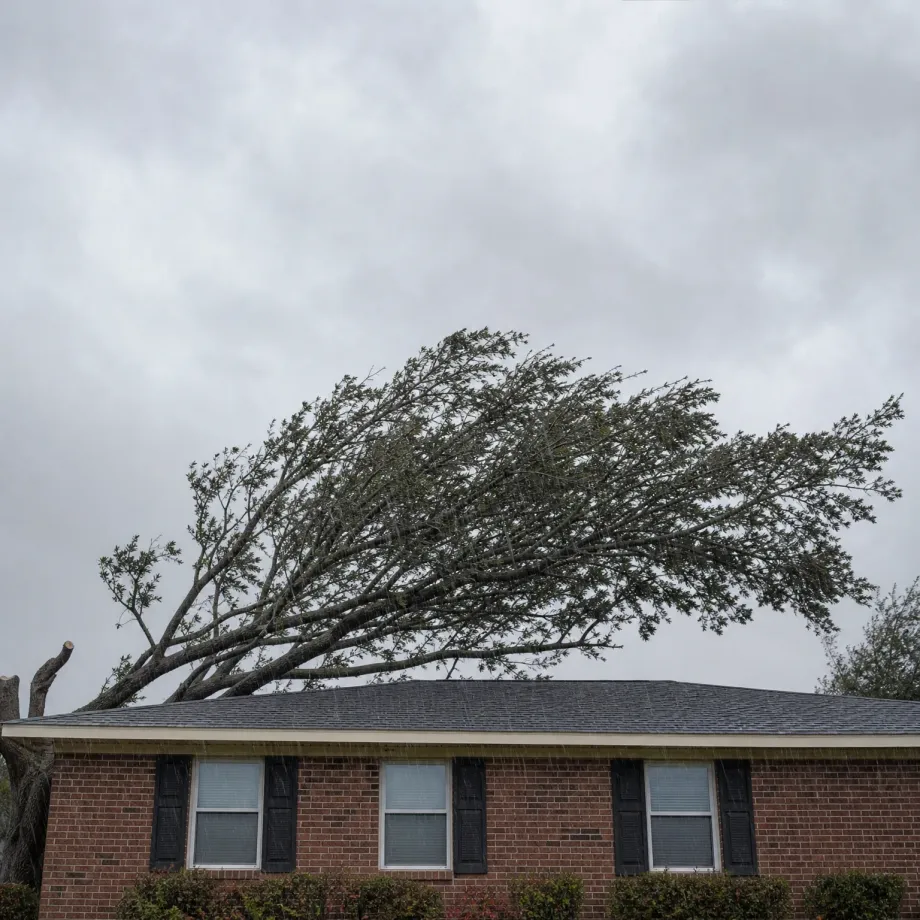
A furnace repair in Weakley County rarely gets its explanation from the weather. 80 severe weather events were recorded in Weakley County, Tennessee between 2015 and 2024. At that rate, severe weather is an occasional event rather than a standing condition, and a contractor diagnosing a failed heat exchanger, a worn inducer motor, or a cracked igniter looks first at the age of the equipment and how well it was put in. Accumulated run-hours and the original install quality are what wear a furnace out here, and those are what the repair scope will reflect.
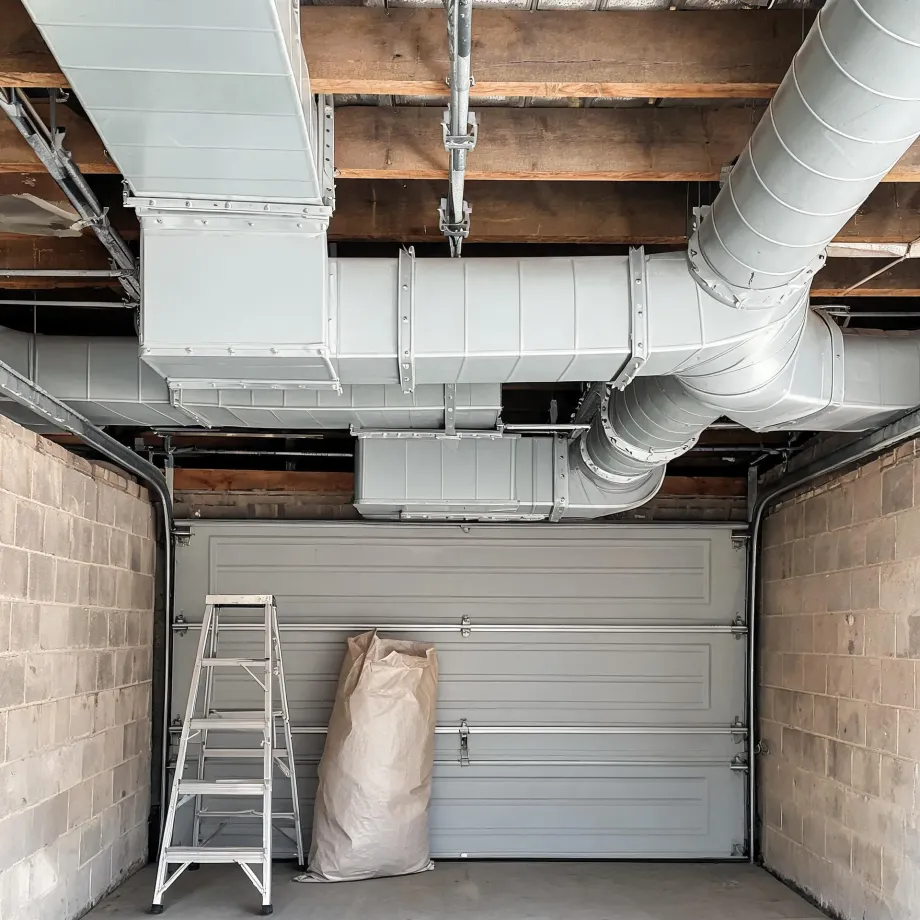
Furnaces in Weakley County houses are often not the original equipment, but they are not new either. Half the homes in Weakley County, Tennessee were built in 1977 or earlier (2020-2024 ACS 5-year). A system that has gone through one or two replacement cycles since the house was built can land in a parts generation that manufacturers no longer stock at full availability. When a contractor opens the heat exchanger or pulls the control board, what they find determines whether the repair is a same-week fix or a search for a compatible substitute. That search is the variable a homeowner does not see on the estimate until it is already underway.
The Parts of a Furnace a Contractor Checks First
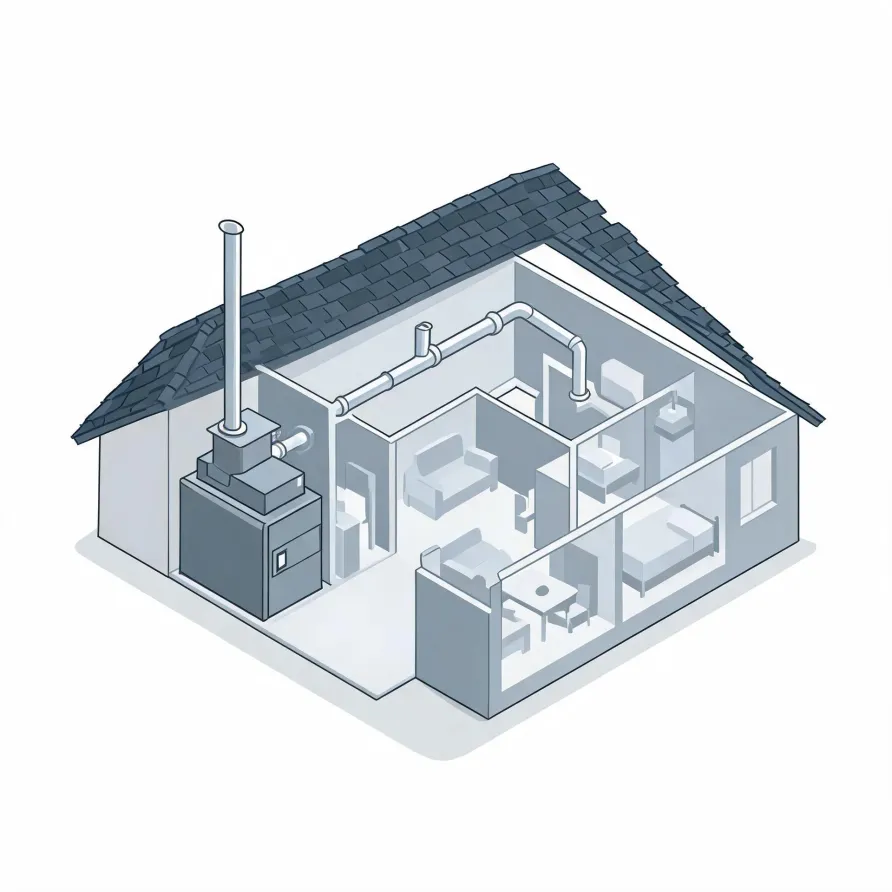
The furnace itself sits in a mechanical room, basement, or closet and is the piece a contractor opens first. Inside it, the heat exchanger is the part most worth understanding: cracks or failures there let combustion gases into living air, so it gets close attention before anything else. The burners, which fire inside the heat exchanger, are another early stop when a furnace is running poorly or not at all.
The blower motor and its fan wheel sit at the base of the furnace cabinet and push conditioned air out through the supply side of the duct system. Alongside those, the control board reads signals from the thermostat and tells each component when to act. A failed board can mimic symptoms that look like burner or motor trouble, which is why a contractor works through the whole cabinet before naming a cause.
The drawing shows a typical furnace layout, and a licensed contractor determines what applies to the specific equipment and configuration in your home.
Find a contractor in Weakley CountyWeakley County, by the numbers
80 severe weather events were recorded in Weakley County, Tennessee between 2015 and 2024.
NOAA National Centers for Environmental Information, Storm Events Database, bulk CSV export, events 2015-01-01 through 2024-12-31.Half the homes in Weakley County, Tennessee were built in 1977 or earlier (2020-2024 ACS 5-year).
U.S. Census Bureau, 2020-2024 American Community Survey 5-Year EstimatesWeakley County, Tennessee holds 15,056 housing units (2020-2024 ACS 5-year).
U.S. Census Bureau, 2020-2024 American Community Survey 5-Year EstimatesOwners occupy 66.3% of the occupied homes in Weakley County, Tennessee (2020-2024 ACS 5-year).
U.S. Census Bureau, 2020-2024 American Community Survey 5-Year EstimatesCodes & Standards Governing Furnace Repair in Weakley County, Tennessee5 sourced rules and standards
What HVAC Repair Looks Like in Weakley County
Non-weatherized gas furnaces manufactured on or after November 19, 2015 must reach 80.0 percent AFUE.
Non-weatherized oil-fired furnaces manufactured on or after November 19, 2015 must reach 83.0 percent AFUE.
Mobile home gas furnaces manufactured on or after November 19, 2015 must reach 80.0 percent AFUE.
Non-weatherized gas furnaces manufactured on or after December 18, 2028 must reach 95.0 percent AFUE, up from the 80.0 percent minimum that applies to units manufactured before that date.
Licensing Rules in Weakley County, Tennessee
Tennessee licenses contractors by classification, and HVAC, refrigeration and gas piping is one of them — a sub-classification of mechanical contracting on the licence the Board for Licensing Contractors issues.
Severe Weather Events in Weakley County
Extreme weather puts real stress on furnace systems, and how hard a system works over its life is shaped by local conditions. That makes the pattern of weather events in Weakley County a practical fact for any furnace repair or maintenance decision.
80 severe weather events, 2015–2024. Source: NOAA National Centers for Environmental Information, Storm Events Database.