Tell us about the job
Takes about a minute. No obligation.
A furnace quote here starts with what the structure actually needs, not with a unit spec sheet. 96 severe weather events were recorded in White County, Tennessee between 2015 and 2024. That puts this area in the middle of the national range, which means a contractor installing a furnace in White County is working against a real but manageable seasonal load. Getting the sizing and sealing right for that load is what determines whether the system runs efficiently year after year. A unit that is oversized for the house cycles too often and wears its heat exchanger faster; one undersized for the winters here never fully recovers on the coldest days. A contractor who knows this area quotes the installation around the building, not around the manufacturer's marketing tier.
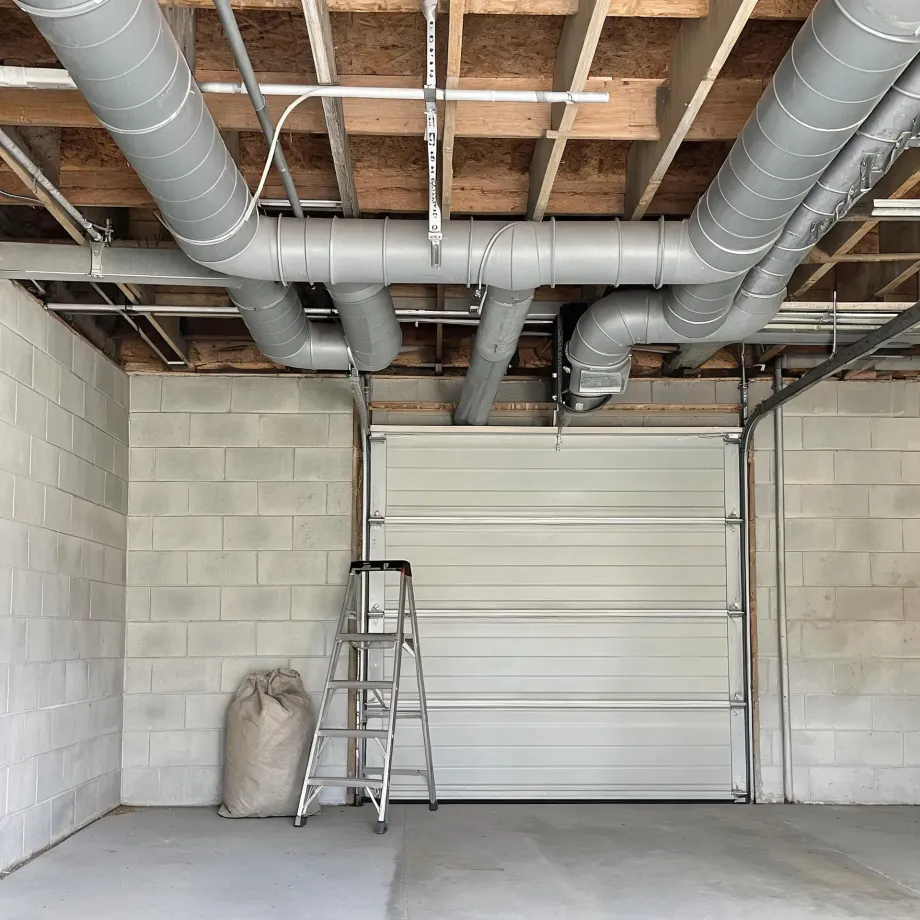
Ductwork laid down for an older generation of heating equipment carries assumptions about static pressure, trunk sizing, and branch runs that a modern furnace does not share. Half the homes in White County, Tennessee were built in 1984 or earlier (2020-2024 ACS 5-year). A contractor quoting a furnace swap here has to assess whether the existing distribution system moves enough air for the new unit before the equipment question is even settled. If it does not, the duct work becomes the job, and the furnace is secondary to it.
What Gets Installed With a New Furnace
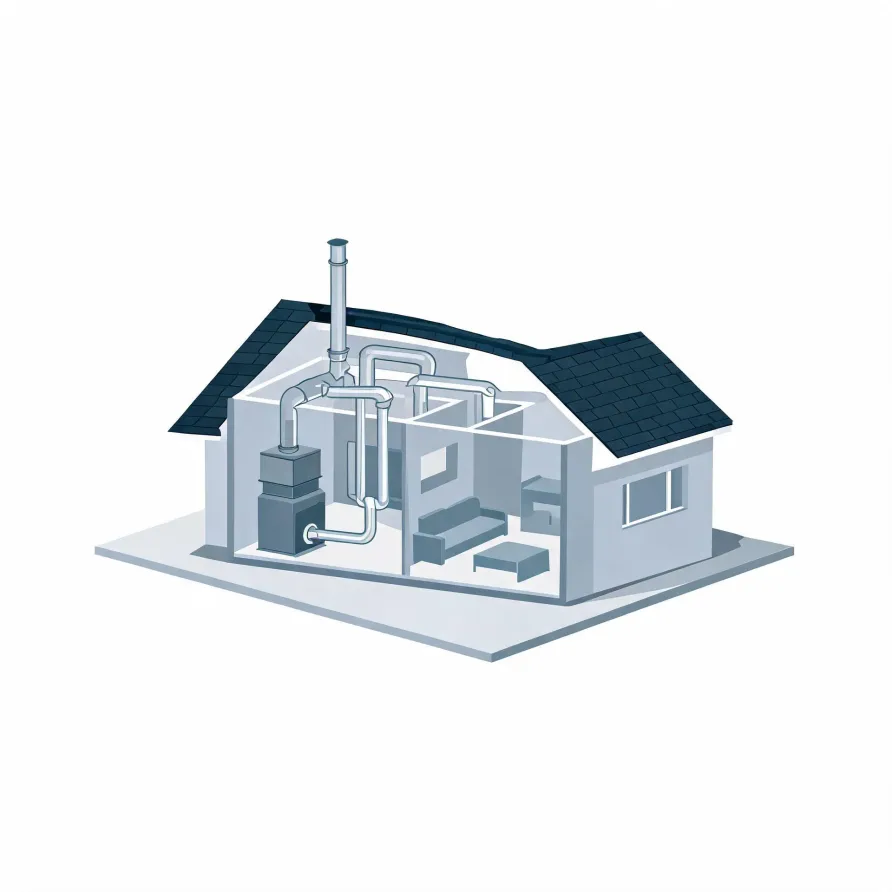
The furnace itself sits in a basement, utility room, or closet and is the unit that produces heat. A heat exchanger inside it warms the air, and a blower motor pushes that air out through the supply side of the home. The flue pipe runs from the furnace to an exterior wall or roofline and carries combustion gases out of the house.
The thermostat mounts on an interior wall and is the control point the homeowner uses to call for heat. A gas valve and a draft inducer motor also come with the unit, and a condensate drain line runs to a floor drain or utility sink when a high-efficiency model is part of the installation.
The drawing shows a typical furnace layout, and a licensed contractor determines exactly what applies to your house.
Find a contractor in White CountyWhite County, Tennessee, by the numbers
96 severe weather events were recorded in White County, Tennessee between 2015 and 2024.
NOAA National Centers for Environmental Information, Storm Events Database, bulk CSV export, events 2015-01-01 through 2024-12-31.Half the homes in White County, Tennessee were built in 1984 or earlier (2020-2024 ACS 5-year).
U.S. Census Bureau, 2020-2024 American Community Survey 5-Year EstimatesWhite County, Tennessee holds 12,335 housing units (2020-2024 ACS 5-year).
U.S. Census Bureau, 2020-2024 American Community Survey 5-Year EstimatesOwners occupy 76.9% of the occupied homes in White County, Tennessee (2020-2024 ACS 5-year).
U.S. Census Bureau, 2020-2024 American Community Survey 5-Year EstimatesCodes & Standards Governing Furnace Installation in White County, Tennessee5 sourced rules and standards
What the Installation Actually Looks Like
Non-weatherized gas furnaces manufactured on or after November 19, 2015 must reach 80.0 percent AFUE.
Non-weatherized oil-fired furnaces manufactured on or after November 19, 2015 must reach 83.0 percent AFUE.
Mobile home gas furnaces manufactured on or after November 19, 2015 must reach 80.0 percent AFUE.
Non-weatherized gas furnaces manufactured on or after December 18, 2028 must reach 95.0 percent AFUE, up from the 80.0 percent minimum that applies to units manufactured before that date.
Licensing Rules for HVAC Work in White County, Tennessee
Tennessee licenses contractors by classification, and HVAC, refrigeration and gas piping is one of them — a sub-classification of mechanical contracting on the licence the Board for Licensing Contractors issues.
Severe Weather Events in White County
Weather puts direct stress on heating equipment, and White County's climate is what determines how hard a furnace has to work and how often. That load profile is local, which is why it shapes every installation decision a contractor makes here.
96 severe weather events, 2015–2024. Source: NOAA National Centers for Environmental Information, Storm Events Database.