Tell us about the job
Takes about a minute. No obligation.
A contractor quoting a furnace installation in DeKalb County is not working around a punishing weather history. 57 severe weather events were recorded in DeKalb County, Tennessee between 2015 and 2024. At that rate, severe weather is an occasional event rather than a standing pressure on equipment, which means the decisions that shape an install here come down to the house itself: its square footage, its insulation, the condition of the duct system, and how the old unit was originally sized. A furnace that has been undersized or poorly sealed since day one will underperform regardless of what the sky does, and that is the problem a good install fixes.
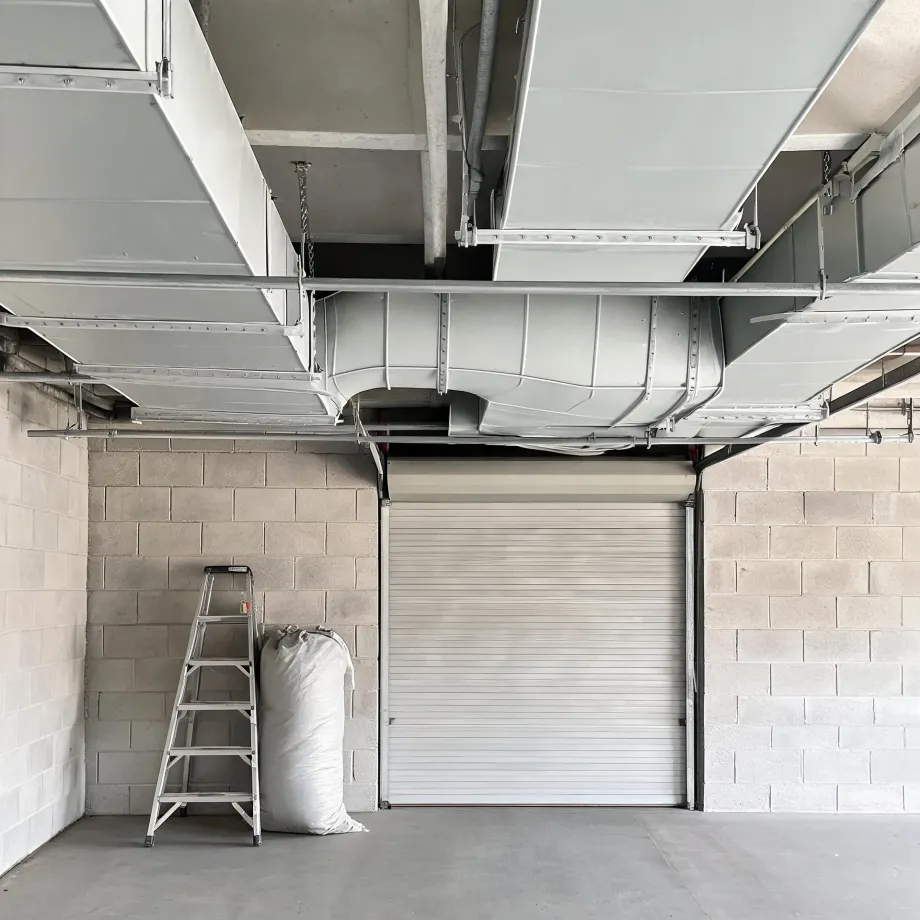
Ductwork sized and routed for an older heating system is what a contractor runs into in a significant share of DeKalb County homes, and whether that ductwork will carry a new furnace is the question that shapes the scope before anything else gets priced. Half the homes in DeKalb County, Tennessee were built in 1986 or earlier (2020-2024 ACS 5-year). A house framed under those conditions was often built around a different distribution model entirely, which means trunk lines, branch runs, and register placement may all need assessment before a new unit goes in. The electrical service is a second checkpoint: what a new furnace draws has to match what the panel actually supplies.
What Gets Installed With a New Furnace
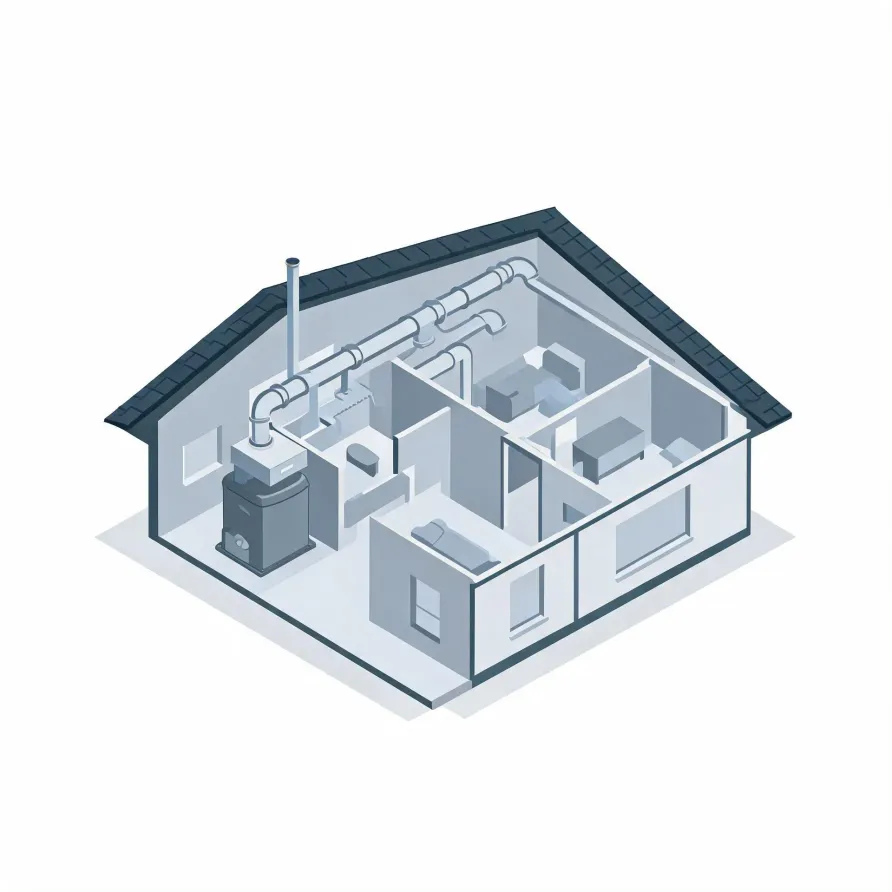
The furnace itself sits in a utility space, basement, or closet near the center of the house. It holds the heat exchanger, the burner assembly, and the blower in a single cabinet. The blower is what pushes conditioned air out through the supply side of the duct system.
The flue pipe runs from the furnace cabinet up and out of the house, carrying combustion gases away. Alongside the cabinet, a contractor installs the gas line connection, the condensate drain if the unit is high-efficiency, and the thermostat wiring that ties the whole system to the controls in the living space.
The drawing shows a general layout of these components, and a licensed contractor determines exactly what applies to your house.
Find a contractor in DeKalb CountyDeKalb County, by the numbers
57 severe weather events were recorded in DeKalb County, Tennessee between 2015 and 2024.
NOAA National Centers for Environmental Information, Storm Events Database, bulk CSV export, events 2015-01-01 through 2024-12-31.Half the homes in DeKalb County, Tennessee were built in 1986 or earlier (2020-2024 ACS 5-year).
U.S. Census Bureau, 2020-2024 American Community Survey 5-Year EstimatesDeKalb County, Tennessee holds 10,155 housing units (2020-2024 ACS 5-year).
U.S. Census Bureau, 2020-2024 American Community Survey 5-Year EstimatesOwners occupy 72.6% of the occupied homes in DeKalb County, Tennessee (2020-2024 ACS 5-year).
U.S. Census Bureau, 2020-2024 American Community Survey 5-Year EstimatesFurnace Installation Rules & Standards for DeKalb County, Tennessee5 sourced codes and standards
What the Installation Actually Looks Like
Non-weatherized gas furnaces manufactured on or after November 19, 2015 must reach 80.0 percent AFUE.
Non-weatherized oil-fired furnaces manufactured on or after November 19, 2015 must reach 83.0 percent AFUE.
Mobile home gas furnaces manufactured on or after November 19, 2015 must reach 80.0 percent AFUE.
Non-weatherized gas furnaces manufactured on or after December 18, 2028 must reach 95.0 percent AFUE, up from the 80.0 percent minimum that applies to units manufactured before that date.
Licensing and Legal Requirements in DeKalb County, Tennessee
Tennessee licenses contractors by classification, and HVAC, refrigeration and gas piping is one of them — a sub-classification of mechanical contracting on the licence the Board for Licensing Contractors issues.
Severe Weather Events in DeKalb County
Weather puts real hours on heating equipment. A furnace that carries a home through hard winters and sudden cold snaps wears differently than one that rarely runs, and that wear shapes what installation decisions make sense here.
57 severe weather events, 2015–2024. Source: NOAA National Centers for Environmental Information, Storm Events Database.