Tell us about the job
Takes about a minute. No obligation.
A contractor quoting a furnace installation in Cannon County has to settle the sizing question first, and the local weather record is a real but limited input into that answer. 75 severe weather events were recorded in Cannon County, Tennessee between 2015 and 2024. At that rate, severe weather is an event here, something a system encounters now and then over its life, not a sustained load that drives component stress year over year. What drives a bad outcome on a new furnace install in this county is almost always a duct system that was never matched to the unit, or a heat exchanger seated without proper clearance. A contractor who skips those checks and blames a short lifespan on the weather is reading the wrong cause.
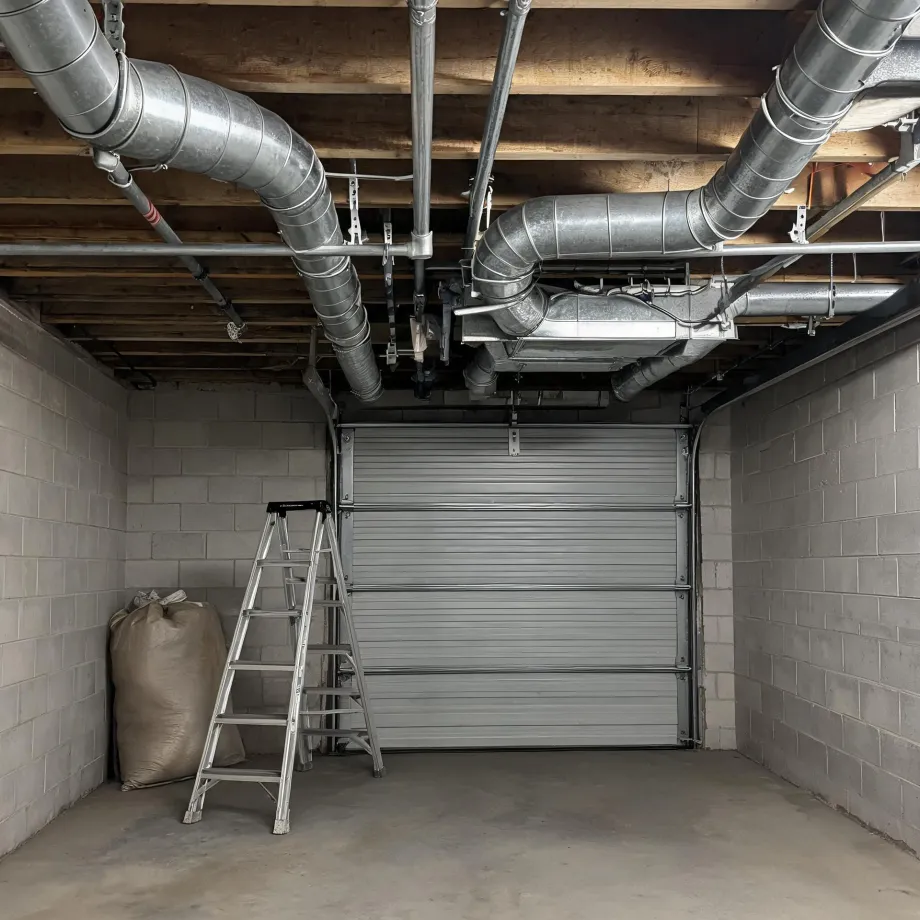
Ductwork laid down for an older generation of furnaces carries assumptions about airflow, sizing, and routing that a new unit may not share. Half the homes in Cannon County, Tennessee were built in 1990 or earlier (2020-2024 ACS 5-year). A contractor quoting a furnace replacement here has to assess what those ducts can actually move before the equipment choice matters much. Runs that worked for one system can restrict or unbalance a newer one, and the electrical service feeding the install warrants the same look. The house sets the terms.
What Gets Installed With a New Furnace
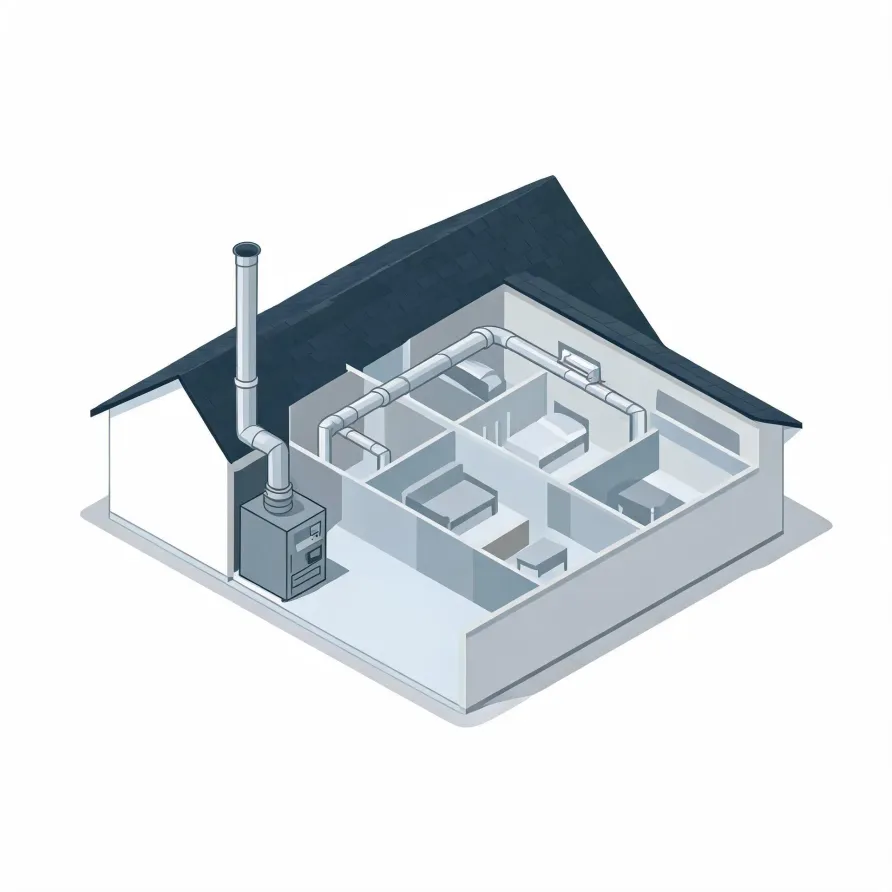
The furnace itself sits in a utility room, basement, or closet and is the unit that produces heated air. A heat exchanger inside it transfers heat to the air moving through, and a blower motor pushes that air out into the home. The flue pipe exits through the wall or roof and carries combustion gases outside.
The thermostat mounts on an interior wall and is what the homeowner sets to control the system. A contractor also installs or connects the gas line that feeds the burners and the condensate or venting components that complete the exhaust path, all of which tie back to the furnace cabinet.
The drawing shows a typical layout, and a licensed contractor determines exactly which components apply to your house and how each one is configured.
Find a contractor in Cannon CountyCannon County, by the numbers
75 severe weather events were recorded in Cannon County, Tennessee between 2015 and 2024.
NOAA National Centers for Environmental Information, Storm Events Database, bulk CSV export, events 2015-01-01 through 2024-12-31.Half the homes in Cannon County, Tennessee were built in 1990 or earlier (2020-2024 ACS 5-year).
U.S. Census Bureau, 2020-2024 American Community Survey 5-Year EstimatesCannon County, Tennessee holds 6,453 housing units (2020-2024 ACS 5-year).
U.S. Census Bureau, 2020-2024 American Community Survey 5-Year EstimatesOwners occupy 78.4% of the occupied homes in Cannon County, Tennessee (2020-2024 ACS 5-year).
U.S. Census Bureau, 2020-2024 American Community Survey 5-Year EstimatesFurnace Installation Rules for Cannon County, Tennessee5 sourced standards and codes
What the Installation Actually Looks Like
Non-weatherized gas furnaces manufactured on or after November 19, 2015 must reach 80.0 percent AFUE.
Non-weatherized oil-fired furnaces manufactured on or after November 19, 2015 must reach 83.0 percent AFUE.
Mobile home gas furnaces manufactured on or after November 19, 2015 must reach 80.0 percent AFUE.
Non-weatherized gas furnaces manufactured on or after December 18, 2028 must reach 95.0 percent AFUE, up from the 80.0 percent minimum that applies to units manufactured before that date.
Licensing Rules for HVAC Work in Cannon County, Tennessee
Tennessee licenses contractors by classification, and HVAC, refrigeration and gas piping is one of them — a sub-classification of mechanical contracting on the licence the Board for Licensing Contractors issues.
Severe Weather Events in Cannon County
Extreme weather puts real strain on heating equipment, pushing furnaces to run harder and longer than they would in mild conditions. How often that happens here shapes what a furnace installation needs to handle, which is why local weather history matters when sizing and selecting equipment for this area.
75 severe weather events, 2015–2024. Source: NOAA National Centers for Environmental Information, Storm Events Database.