
Tell us about the job
Takes about a minute. No obligation.
A furnace repair in Smith County asks a contractor to sort through what the equipment has actually been running against. 116 severe weather events were recorded in Smith County, Tennessee between 2015 and 2024. At that rate, severe weather is a standing part of operating conditions here, and components that handle heat exchange, ignition and airflow carry that load season after season. When something fails, a contractor has to determine whether the wear traces back to that accumulated stress or to a part that was undersized, poorly installed or simply old. Those are different repairs, and they land on different line items in the quote.
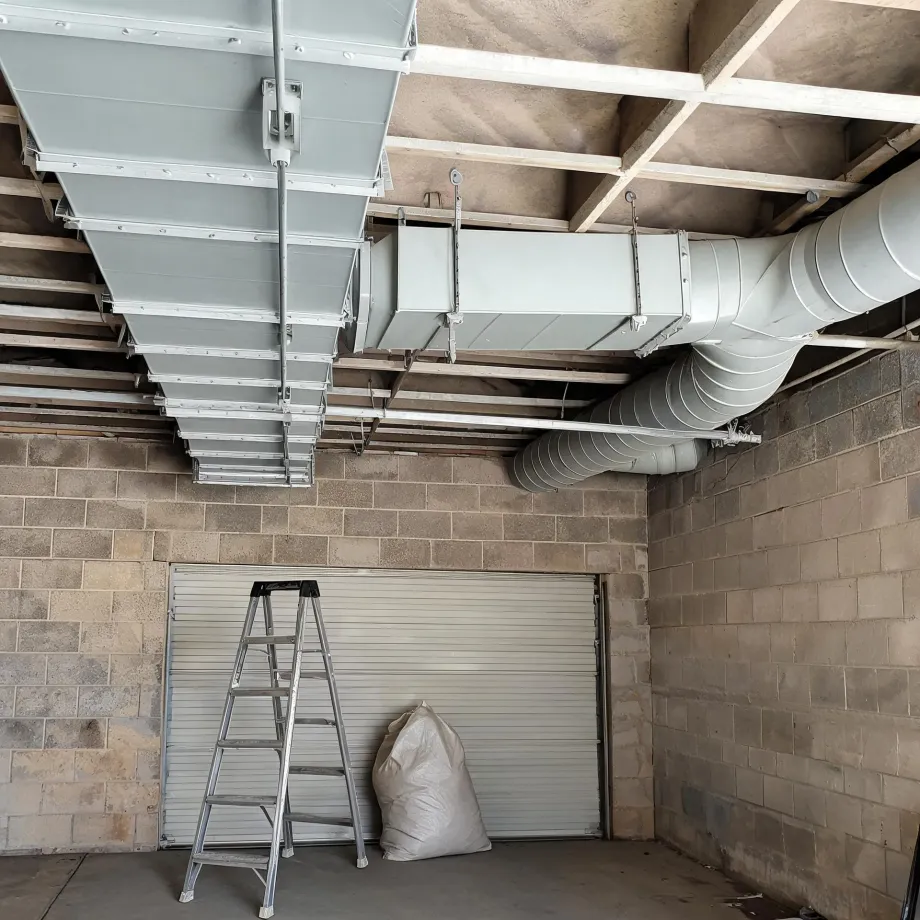
Ductwork in a house this old was designed and built for systems that no longer exist in catalogs. Half the homes in Smith County, Tennessee were built in 1988 or earlier (2020-2024 ACS 5-year). When a contractor opens a furnace in stock like this, the first question is whether the failed component can still be sourced, or whether a workaround has to be fabricated. That answer shapes the repair bill more than the labor does.
The Parts of a Furnace a Contractor Checks First
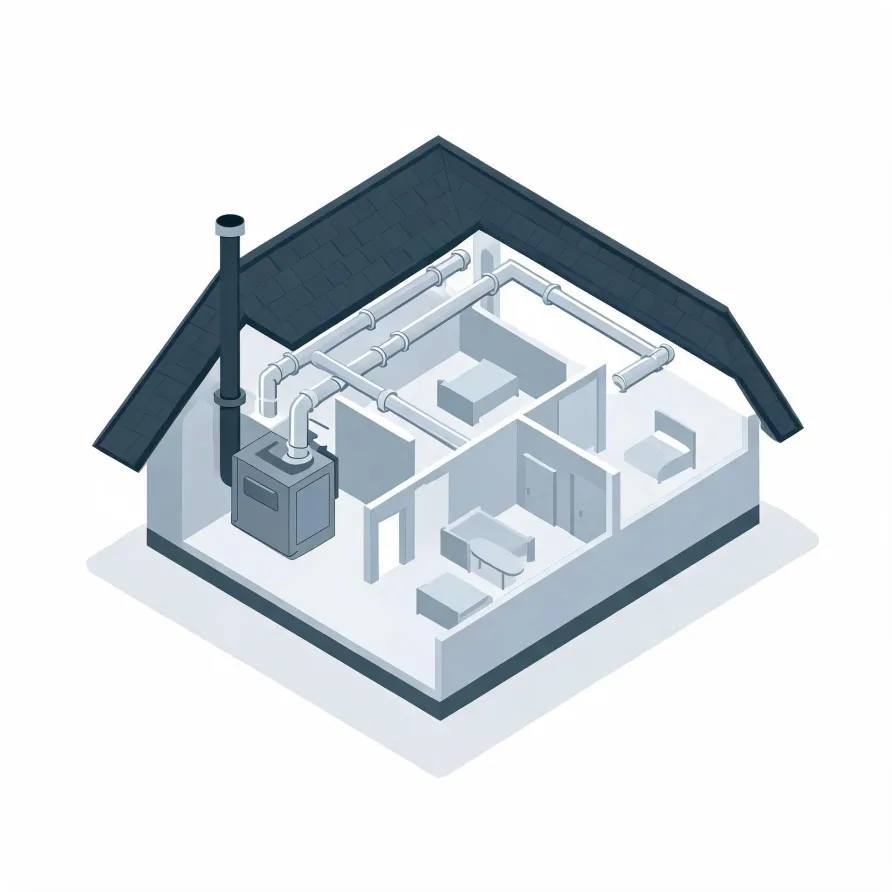
The furnace itself sits in the basement, utility closet, or crawlspace and is the piece a contractor goes to first. Inside it, the heat exchanger is the part most worth understanding: a crack or failure there is what turns a heating problem into a safety problem. The burners, which fire beneath the heat exchanger, and the igniter, which lights them, are the pieces that fail most often when the furnace won't start.
The blower motor sits at the base of the furnace cabinet and pushes conditioned air through the house. Alongside it, the flue pipe carries combustion gases out through the roof or an exterior wall. The control board ties those pieces together, reading sensors and telling each component when to run.
The drawing shows a general furnace layout, and a licensed contractor will determine which components apply to your specific system and situation.
Find a contractor in Smith CountySmith County, Tennessee, by the numbers
116 severe weather events were recorded in Smith County, Tennessee between 2015 and 2024.
NOAA National Centers for Environmental Information, Storm Events Database, bulk CSV export, events 2015-01-01 through 2024-12-31.Half the homes in Smith County, Tennessee were built in 1988 or earlier (2020-2024 ACS 5-year).
U.S. Census Bureau, 2020-2024 American Community Survey 5-Year EstimatesSmith County, Tennessee holds 8,752 housing units (2020-2024 ACS 5-year).
U.S. Census Bureau, 2020-2024 American Community Survey 5-Year EstimatesOwners occupy 76.9% of the occupied homes in Smith County, Tennessee (2020-2024 ACS 5-year).
U.S. Census Bureau, 2020-2024 American Community Survey 5-Year EstimatesCodes & Standards Covering Furnace Repair in Smith County, Tennessee5 sourced rules and standards
What Happens When the Contractor Comes Out
Non-weatherized gas furnaces manufactured on or after November 19, 2015 must reach 80.0 percent AFUE.
Non-weatherized oil-fired furnaces manufactured on or after November 19, 2015 must reach 83.0 percent AFUE.
Mobile home gas furnaces manufactured on or after November 19, 2015 must reach 80.0 percent AFUE.
Non-weatherized gas furnaces manufactured on or after December 18, 2028 must reach 95.0 percent AFUE, up from the 80.0 percent minimum that applies to units manufactured before that date.
Licensing Rules for HVAC Repair in Smith County, Tennessee
Tennessee licenses contractors by classification, and HVAC, refrigeration and gas piping is one of them — a sub-classification of mechanical contracting on the licence the Board for Licensing Contractors issues.
Severe Weather Events in Smith County
Hard weather puts real hours on a furnace. Every pressure swing, power fluctuation, and temperature extreme a storm brings asks something of the equipment, and what that demand looks like in Smith County shapes what local repair work actually involves.
116 severe weather events, 2015–2024. Source: NOAA National Centers for Environmental Information, Storm Events Database.