Tell us about the job
Takes about a minute. No obligation.
A contractor diagnosing a furnace in Cumberland County starts by ruling out what the weather did not do. 83 severe weather events were recorded in Cumberland County, Tennessee between 2015 and 2024. At that rate, severe weather here is an event, not a standing condition, and the cumulative load it places on a heating system is modest. Heat exchangers that crack, igniters that fail, and motors that seize in this county are telling a story about age and service history. A contractor who attributes the breakdown to weather is reaching for an explanation the record does not support.
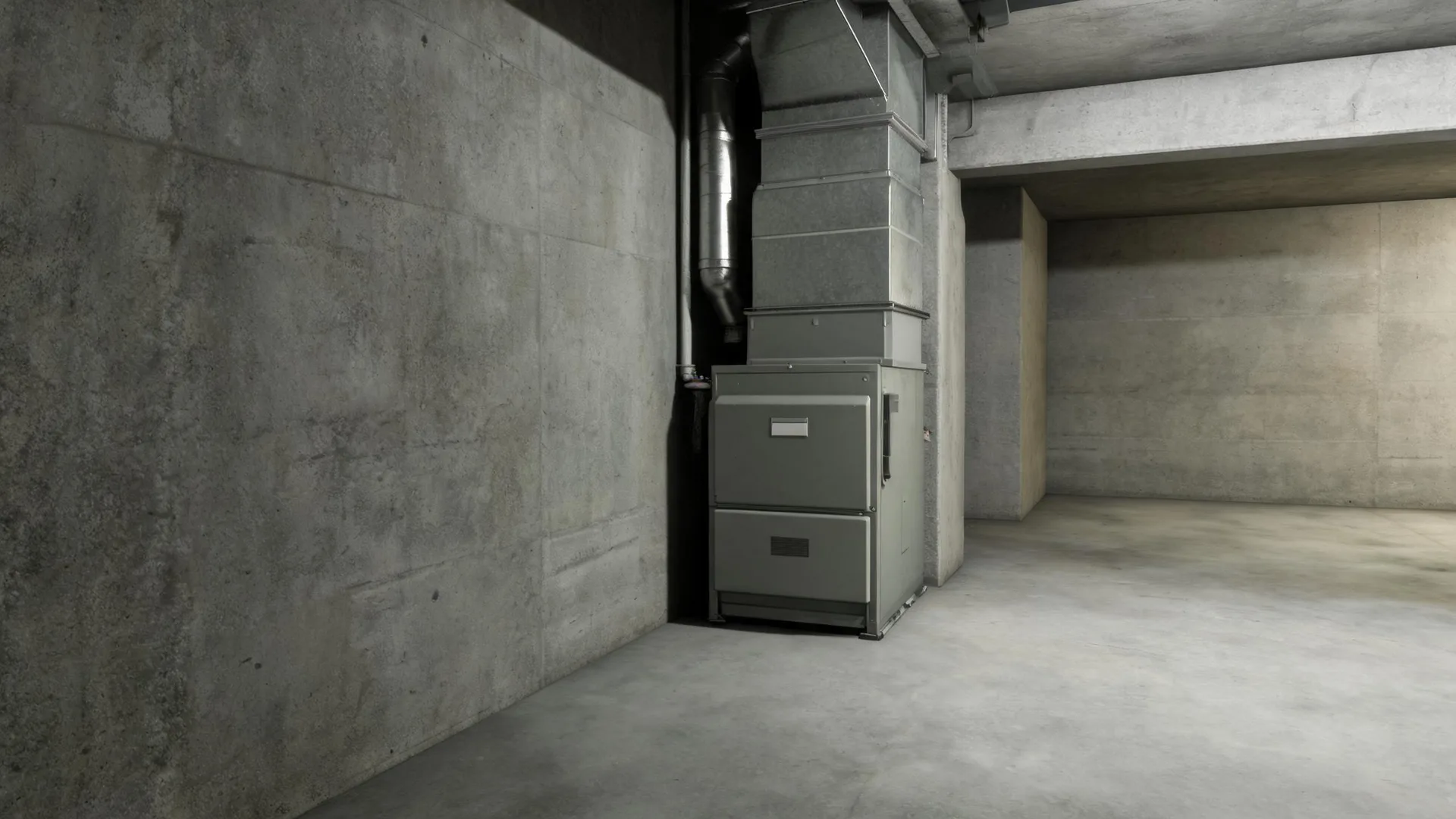
Furnaces in houses built this long ago have usually been replaced at least once, which means the ductwork has already been sized and sealed around whatever came before, and the electrical has already been adapted. Half the homes in Cumberland County, Tennessee were built in 1994 or earlier (2020-2024 ACS 5-year). A repair call in stock like this lands on the opened equipment itself: what the heat exchanger looks like, what the inducer or igniter turns out to be, and whether a supplier still stocks the part. When a system has been running through that many seasons, the question a contractor is answering is not about the house. It is about whether the part a furnace of that vintage takes is still on a shelf somewhere.
The Parts of a Furnace a Contractor Checks First
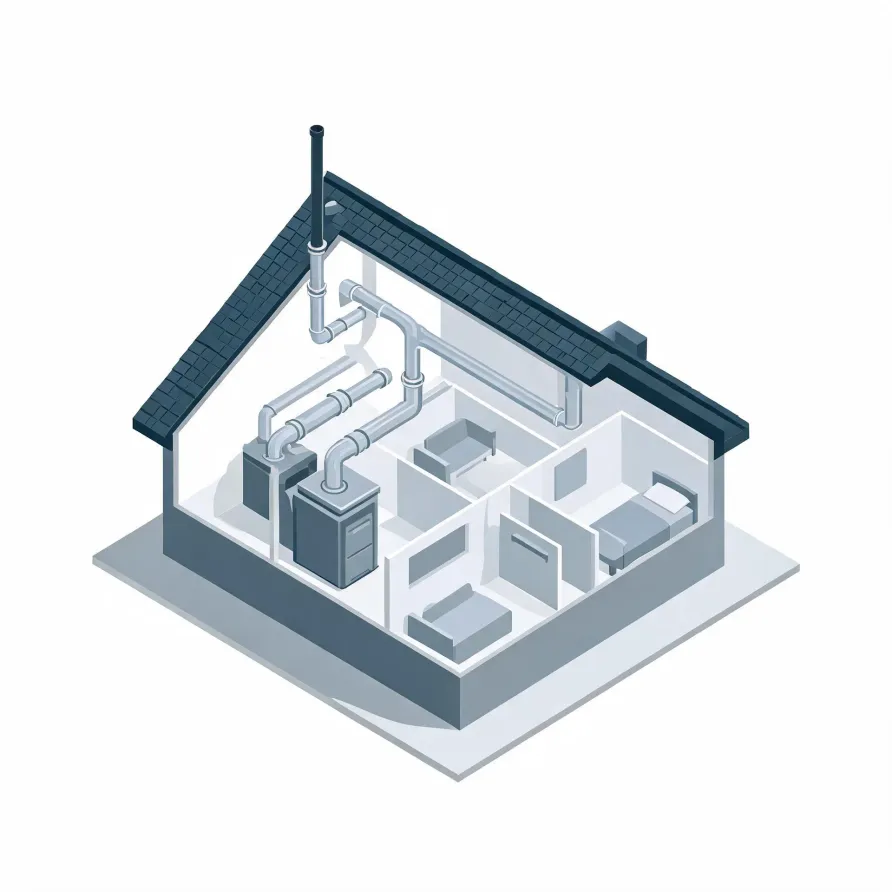
The heat exchanger sits at the core of the furnace cabinet in the mechanical room or utility space, and it is the part that warms the air before it moves through the house. Cracks or stress in the exchanger are a common cause of heat loss and, in gas units, a reason the system shuts down as a safety measure. The burner assembly sits just below it, and a contractor checks it early when the furnace fails to produce heat at all.
The blower motor and its fan wheel sit at the base of the cabinet and push conditioned air into the supply side of the duct system. The control board, mounted inside the cabinet door, reads signals from the thermostat and tells every other component when to run. The flue pipe carries combustion gases out through the wall or roof, and a blockage or separation there will trip the furnace off before it finishes a cycle.
The drawing shows a typical furnace layout, and a licensed contractor determines which components apply and what needs attention in your specific home.
Find a contractor in Cumberland CountyCumberland County, by the numbers
83 severe weather events were recorded in Cumberland County, Tennessee between 2015 and 2024.
NOAA National Centers for Environmental Information, Storm Events Database, bulk CSV export, events 2015-01-01 through 2024-12-31.Half the homes in Cumberland County, Tennessee were built in 1994 or earlier (2020-2024 ACS 5-year).
U.S. Census Bureau, 2020-2024 American Community Survey 5-Year EstimatesCumberland County, Tennessee holds 31,455 housing units (2020-2024 ACS 5-year).
U.S. Census Bureau, 2020-2024 American Community Survey 5-Year EstimatesOwners occupy 80.2% of the occupied homes in Cumberland County, Tennessee (2020-2024 ACS 5-year).
U.S. Census Bureau, 2020-2024 American Community Survey 5-Year EstimatesCodes & Standards Behind Furnace Repair in Cumberland County, Tennessee5 sourced rules and standards
What Happens When a Contractor Comes Out
Non-weatherized gas furnaces manufactured on or after November 19, 2015 must reach 80.0 percent AFUE.
Non-weatherized oil-fired furnaces manufactured on or after November 19, 2015 must reach 83.0 percent AFUE.
Mobile home gas furnaces manufactured on or after November 19, 2015 must reach 80.0 percent AFUE.
Non-weatherized gas furnaces manufactured on or after December 18, 2028 must reach 95.0 percent AFUE, up from the 80.0 percent minimum that applies to units manufactured before that date.
Licensing Rules for HVAC Repair in Cumberland County, Tennessee
Tennessee licenses contractors by classification, and HVAC, refrigeration and gas piping is one of them — a sub-classification of mechanical contracting on the licence the Board for Licensing Contractors issues.
Severe Weather Events in Cumberland County
Hard weather puts real hours on a furnace. Every time conditions push a system through recovery cycles, the load adds up, and that wear shows up as repair calls.
83 severe weather events, 2015–2024. Source: NOAA National Centers for Environmental Information, Storm Events Database.